
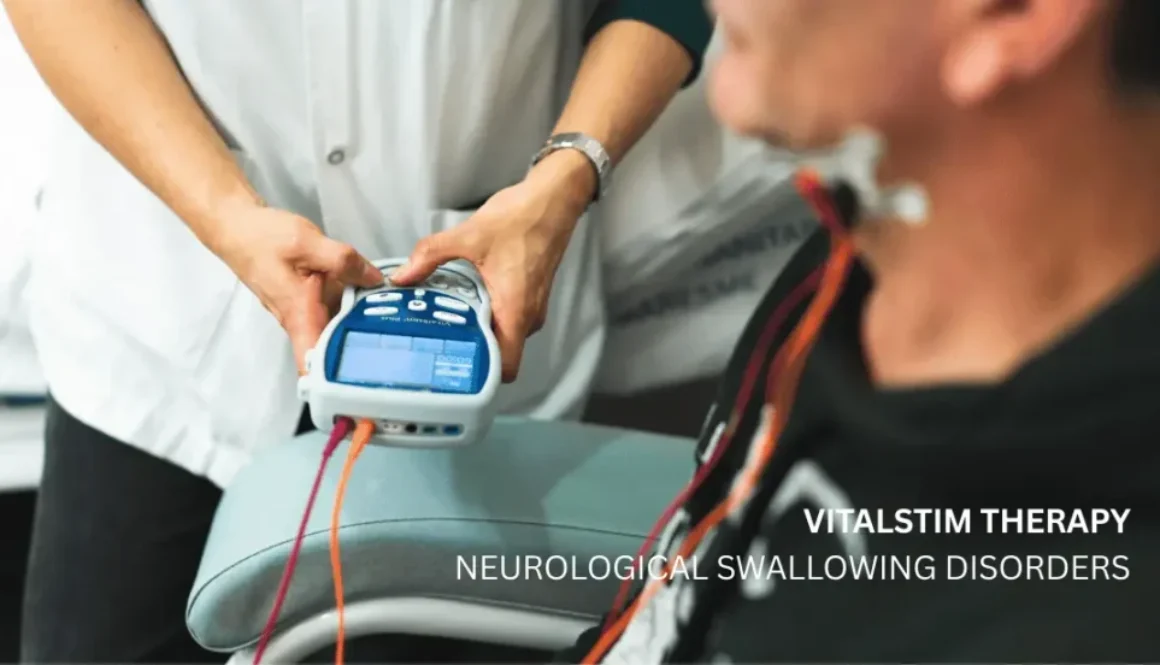
VitalStim Therapy | Neurological Swallowing Disorders
VitalStim Therapy: Advanced Swallowing Rehabilitation for Dysphagia and Neurological Conditions
VitalStim Therapy is an advanced and clinically proven treatment designed to improve swallowing difficulties caused by stroke and other neurological conditions. At Kent Healthcare, we provide specialized dysphagia rehabilitation programs for individuals living with neurological swallowing disorders, where eating and drinking can become challenging and even dangerous. Through specialized neuromuscular electrical stimulation combined with targeted swallowing exercises, VitalStim Therapy helps strengthen weakened muscles, restore coordination, and support safer swallowing recovery.
Modern rehabilitation has introduced innovative solutions that go beyond traditional therapy methods. One of the most effective and evidence-based approaches today is VitalStim Therapy, an advanced neuromuscular electrical stimulation treatment designed specifically to improve swallowing function. At Kent Healthcare, our certified therapists integrate this advanced swallowing therapy into personalized treatment plans tailored to each patient’s neurological condition and recovery goals.
In this article, we will explore how VitalStim Therapy works, who can benefit from it, and why it is considered a breakthrough in dysphagia treatment and post-stroke rehabilitation.
Understanding Dysphagia and Neurological Swallowing Disorders
Dysphagia refers to difficulty in swallowing food, liquids, or saliva safely and effectively. It may occur due to muscle weakness, nerve damage, or structural abnormalities. Many cases are linked to Neurological Swallowing Disorders, where the brain fails to properly coordinate the complex muscle movements required for swallowing.
Common causes include:
Stroke
Parkinson’s disease
Multiple sclerosis
Brain injury
Motor neuron disease
Head and neck cancer
Age-related muscle weakness
Swallowing involves more than 30 muscles and multiple cranial nerves. Even minor neurological impairment can disrupt this delicate coordination. Without proper intervention, dysphagia can result in serious health complications.
This is where VitalStim Therapy plays a transformative role in recovery.
What is VitalStim Therapy?
VitalStim Therapy is a specialized, FDA-cleared neuromuscular electrical stimulation treatment used by certified speech-language pathologists to improve swallowing function. VitalStim Therapy works by delivering small, controlled electrical impulses to the throat muscles through external electrodes placed on the neck.
These electrical impulses stimulate weakened muscles and help retrain the brain-muscle connection involved in swallowing. When combined with traditional swallowing exercises, VitalStim Therapy accelerates muscle strengthening, improves coordination, and enhances safe swallowing.
Unlike surgical procedures or medication-based approaches, VitalStim Therapy is non-invasive, clinically proven, and widely used to support functional recovery in patients with neurological swallowing disorders.
How VitalStim Treatment Works
During a session of VitalStim Therapy, small electrodes are carefully placed on specific areas of the patient’s neck. These electrodes deliver gentle, controlled electrical stimulation to activate the muscles involved in swallowing.
A typical VitalStim Therapy session at Kent Healthcare includes:
-
Neuromuscular electrical stimulation
-
Guided swallowing exercises
-
Functional swallowing practice
-
Ongoing clinical assessment
The electrical stimulation provided by VitalStim Therapy helps:
-
Strengthen weakened swallowing muscles
-
Improve laryngeal elevation
-
Enhance sensory awareness
-
Increase muscle coordination
By combining targeted stimulation with active therapy exercises, VitalStim Therapy encourages the brain to re-learn proper swallowing patterns. This dual approach makes VitalStim Therapy highly effective compared to traditional exercise-only rehabilitation methods, offering faster and safer recovery for patients with neurological swallowing disorders.
VitalStim for Post-Stroke Swallowing Rehabilitation
Stroke is one of the leading causes of dysphagia worldwide. Up to 65% of stroke patients experience swallowing difficulties in the early stages of recovery.
Damage to brain areas controlling swallowing muscles can disrupt coordination and strength. VitalStim for Post-Stroke Swallowing Rehabilitation has shown promising results in restoring safe swallowing function.
Post-stroke patients benefit from:
Faster muscle activation
Improved neural reorganization
Reduced risk of aspiration
Shorter recovery time
Early intervention with VitalStim Therapy can significantly reduce long-term complications and improve patient independence.
Benefits of VitalStim Therapy
There are several reasons why VitalStim Therapy is considered an Advanced Swallowing Therapy option for dysphagia patients.
1. Non-Invasive Treatment
No surgery or injections are required.
2. Clinically Proven
Backed by research and widely used in neurological rehabilitation centers.
3. Faster Functional Recovery
Electrical stimulation enhances muscle response during therapy.
4. Safe and Comfortable
Most patients feel only mild tingling during sessions.
5. Personalized Treatment Plans
Each therapy plan is tailored according to individual swallowing assessment results.
For individuals struggling with chronic dysphagia, VitalStim Therapy provides renewed hope for safe eating and drinking.
Who is a Candidate for VitalStim Treatment for Dysphagia?
VitalStim Treatment for Dysphagia is recommended for patients diagnosed with swallowing disorders caused by:
Stroke
Parkinson’s disease
Multiple sclerosis
Traumatic brain injury
Post-surgical complications
Age-related muscle weakness
However, not everyone is automatically eligible. A comprehensive swallowing evaluation by a certified speech-language pathologist is essential before starting treatment.
Patients with pacemakers or certain medical conditions may require additional medical clearance.
What to Expect During a Session
A typical VitalStim Therapy session lasts between 45–60 minutes.
The process includes:
-
Clinical reassessment
-
Electrode placement
-
Adjustment of stimulation intensity
-
Guided swallowing tasks
-
Monitoring patient response
The stimulation level is adjusted according to patient comfort and muscle activation. Most patients describe the sensation as mild tingling or muscle tapping.
Therapy frequency may vary, but many patients attend 2–5 sessions per week depending on severity.
Advanced Swallowing Therapy vs Traditional Therapy
Traditional Dysphagia Treatment often focuses solely on compensatory techniques such as:
Diet modification
Postural adjustments
Swallow maneuvers
While these methods are helpful, they may not directly strengthen the underlying muscles.
VitalStim Therapy, as part of an Advanced Swallowing Therapy approach, targets the root cause—muscle weakness and neural disruption—rather than just managing symptoms.
This combination of stimulation and exercise promotes long-term improvement rather than temporary adaptation.
Clinical Outcomes and Success Rates
Studies show that patients receiving VitalStim Therapy alongside conventional therapy demonstrate greater improvements compared to therapy alone.
Reported outcomes include:
Improved swallowing safety
Reduced feeding tube dependency
Better nutritional intake
Enhanced quality of life
Recovery speed varies depending on:
Age
Severity of neurological damage
Early intervention timing
Therapy consistency
With structured rehabilitation, many patients experience significant functional gains.
Importance of Early Dysphagia Treatment
Untreated dysphagia can lead to serious complications:
Aspiration pneumonia
Chronic malnutrition
Dehydration
Social isolation
Reduced independence
Early implementation of VitalStim Therapy reduces these risks and supports faster neurological recovery.
The sooner treatment begins, the better the outcomes.
Emotional and Psychological Impact of Swallowing Disorders
Beyond physical health, swallowing difficulties can significantly impact emotional wellbeing. Many patients experience anxiety during meals or avoid eating socially due to fear of choking.
Restoring safe swallowing through VitalStim Therapy not only improves nutrition but also helps rebuild confidence and independence. At Kent Healthcare, patients undergoing VitalStim Therapy often report reduced anxiety, greater comfort while eating, and a renewed sense of control over daily life.
By addressing both the physical and emotional challenges of dysphagia, VitalStim Therapy enables patients to enjoy meals safely and improves overall quality of life.
Why Choose Professional VitalStim Treatment?
Both approaches are effective depending on patient needs.
Clinic-based physical therapy provides access to advanced equipment
Home physiotherapy offers convenience and comfort
Kent Healthcare offers both options to ensure continuity of care.
How VitalStim Therapy Works
-
VitalStim Therapy uses gentle, controlled electrical impulses to stimulate the muscles involved in swallowing. During a typical session at Kent Healthcare, small electrodes are carefully placed on the patient’s neck, targeting the weakened muscles responsible for laryngeal elevation and safe swallowing.
These impulses activate the nerves and muscles, helping retrain the brain to coordinate swallowing more effectively. When combined with specialized swallowing exercises, VitalStim Therapy strengthens muscle function, improves reflex timing, and enhances overall swallowing safety.
The therapy is non-invasive and customizable, allowing certified therapists at Kent Healthcare to adjust the intensity and placement of the electrodes according to each patient’s condition. Over repeated sessions, patients often notice increased muscle control, reduced risk of choking, and improved confidence while eating or drinking.
By focusing on the root cause of dysphagia rather than just the symptoms, VitalStim Therapy provides a targeted approach to rehabilitation, making it one of the most effective solutions for neurological swallowing disorders and post-stroke recovery.
No. Most patients feel mild tingling or gentle muscle contraction.
It depends on the severity of dysphagia and underlying neurological condition.
Yes, when administered by certified professionals.
Results vary. Many patients achieve significant improvement, especially when therapy begins early.