Cerebral palsy is a permanent movement disorder caused by injury to the developing brain. The brain injury itself doesn't progress, but the functional impact changes throughout childhood and into adulthood as the child grows. Structured, sustained rehabilitation across childhood is what allows children with cerebral palsy to reach their functional ceiling—and that ceiling is usually substantially higher than families are first told.
What cerebral palsy treatment involves
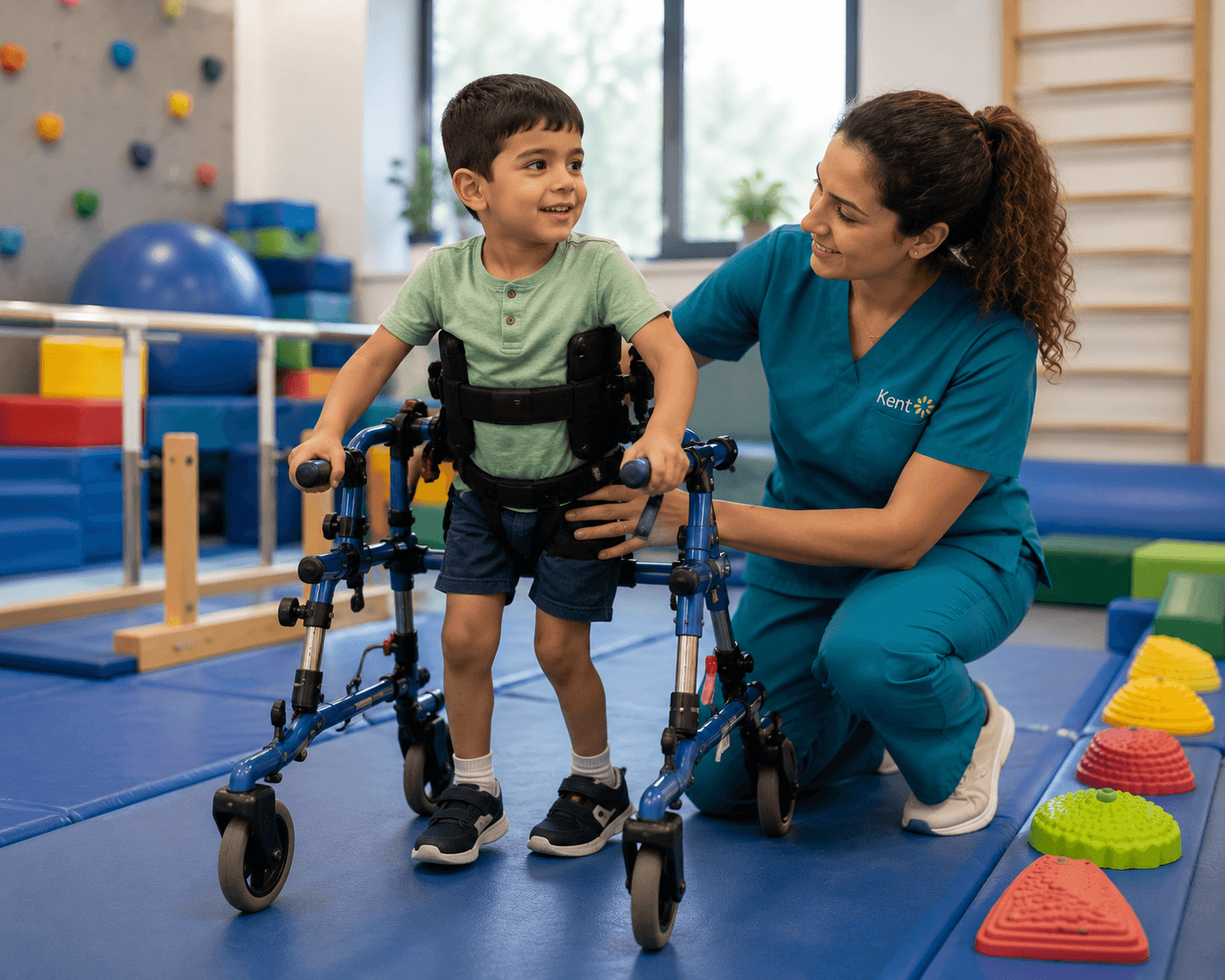
- Pediatric physiotherapy—gross motor development, gait training where applicable, strength, range of motion, contracture prevention, equipment fitting.
- Occupational therapy — fine motor skills, self-care, school readiness, sensory regulation, hand function.
- Speech-language therapy where communication or feeding is affected—including AAC where verbal speech is not the right primary mode.
- Coordination with orthopedic surgery, neurosurgery, and rehabilitation medicine on tone management (botulinum toxin, selective dorsal rhizotomy where indicated).
- Family training in handling, positioning, and home programs.
Working with the wider team
Children with cerebral palsy typically have a complex care team—developmental pediatrics, neurology, orthopedic surgery, sometimes neurosurgery, ophthalmology, and education. We coordinate closely with all of them. We send written progress reports to your child's medical team at every reassessment and attend multidisciplinary meetings where useful.
Across the childhood journey
Cerebral palsy rehabilitation isn't a single program—it's a relationship that develops across years.
- Intensive blocks during periods of rapid growth or before/after surgical interventions.
- Maintenance work during stable phases.
- Regular reassessment of equipment as the child grows.
- Transition planning into adolescence and adulthood.
We're built for this kind of long-term care.
Outcome measures we use
- Gross Motor Function Classification System (GMFCS)
- Gross Motor Function Measure (GMFM-66)
- Manual Ability Classification System (MACS)
- Communication Function Classification System (CFCS)
- Pediatric Evaluation of Disability Inventory (PEDI)
- Goal Attainment Scaling
Who leads this work at Kent
Cerebral palsy treatment at Kent is led by Ayingbee Kakchingtabam, DHA-licensed pediatric clinician with specific cerebral palsy training.
Frequently asked questions
At what age should cerebral palsy treatment start?
As soon as the diagnosis is made or suspected. Early intervention is the strongest predictor of long-term outcomes. We work with infants from a few months of age onward.
What's GMFCS?
The Gross Motor Function Classification System describes a child's typical mobility on a scale from I (walks without limitation) to V (transported in a manual wheelchair). It helps families and clinicians understand realistic functional goals and predict trajectory. We use it from initial assessment onward.
Will my child walk?
Depends on the GMFCS level, type of cerebral palsy, and many other factors. For children with GMFCS I–II, walking is typically expected. For levels III and IV, walking may be possible with assistive devices. For level V, walking is usually not a functional goal, and rehabilitation focuses on other capabilities. We give expert assessments based on the specific child.
What about Botox or surgery for spasticity?
We coordinate closely with the medical team on tone management. Botulinum toxin injections, selective dorsal rhizotomy, and orthopedic surgery all have roles for specific children at specific times. We do not deliver these treatments ourselves but work alongside the team that does.
Do you coordinate with schools?
Yes, extensively. School coordination is part of every cerebral palsy program. We provide reports, attend meetings, and work with school therapists where present.
What about adults with cerebral palsy?
Adults with cerebral palsy often have rehabilitation needs that are under-addressed. We work with adolescents and adults with cerebral palsy through our Movement and Neurological Rehabilitation practices, often on specific issues like pain, gait deterioration, or function maintenance.