
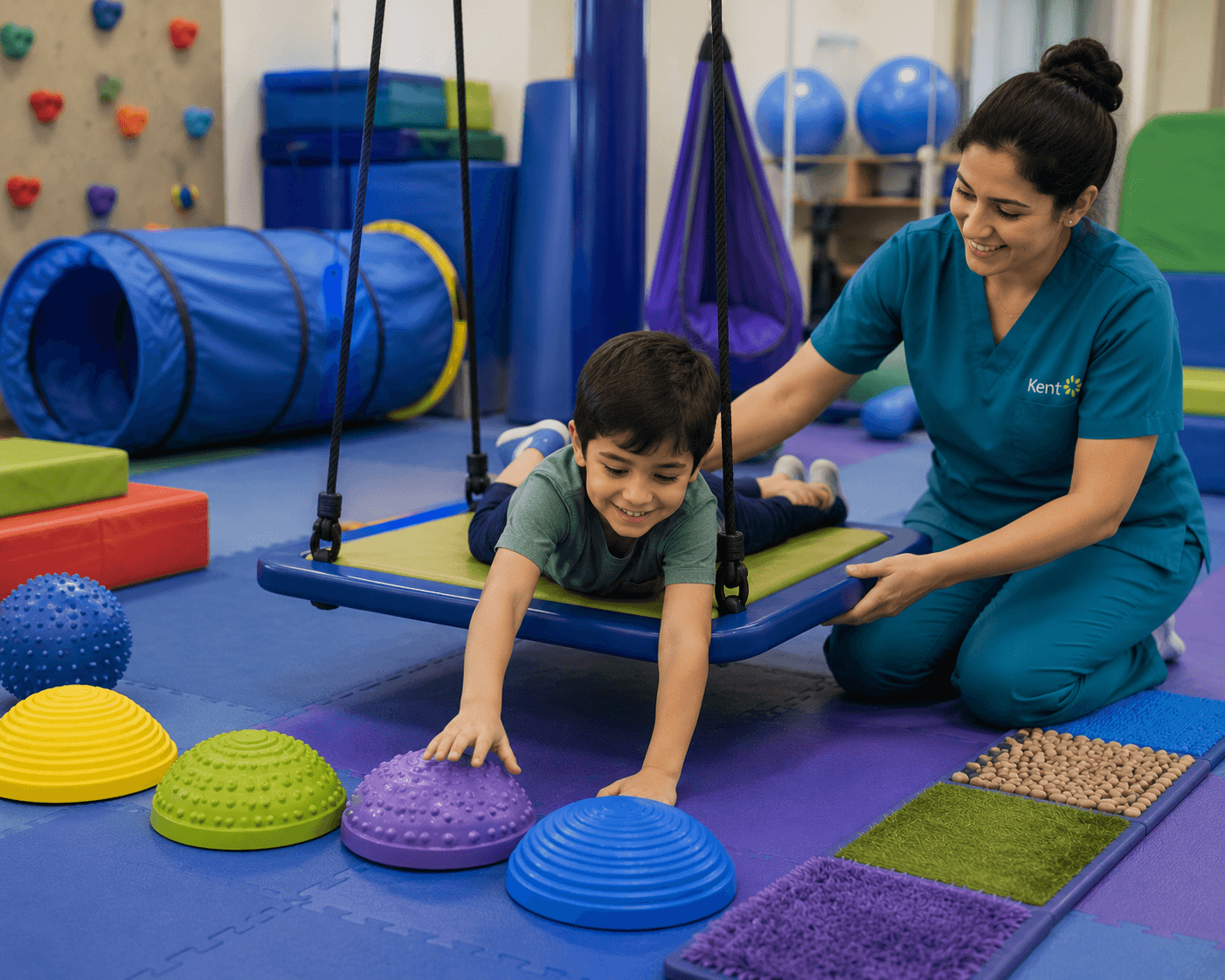
Sensory processing differences affect many children—those on the autism spectrum, those with developmental coordination disorder, those with ADHD, and many children without a specific diagnosis. When sensory processing is affecting daily life—eating, dressing, sleeping, learning, social interaction—structured occupational therapy with sensory integration produces meaningful change.
What we treat
Sensory over-responsivity — children distressed by sounds, textures, movement, smells. Sensory under-responsivity — children who don't notice or respond to typical sensory input. Sensory seeking — children who need intense sensory input to feel regulated. Sensory discrimination difficulties—trouble making sense of sensory information. Sensory-based motor difficulties—postural and praxis issues. Sensory regulation issues in children with autism, ADHD, developmental coordination disorder, and other neurodevelopmental profiles.
Our program
Sensory Foundations—a structured pediatric occupational therapy program built around sensory integration principles. Sessions take place in our sensory gym, which includes suspended equipment (swings, hammocks), vestibular and proprioceptive tools, tactile materials, and the space to deliver evidence-based sensory integration interventions.
Our approach
Comprehensive sensory assessment using validated tools. A treatment plan with specific goals for daily-life function—not just for sensory tolerance in isolation. Sensory integration intervention delivered in the gym, with explicit coaching for parents on how to extend the work into home routines (the "sensory diet"). Coordination with the child's school where sensory issues affect classroom function.
Outcome measures we use
- Sensory Profile-2
- Sensory Integration and Praxis Tests (SIPT) where available
- Goal Attainment Scaling
- Parent-Reported Function in Daily Routines
Who leads this work at Kent
Sensory processing therapy at Kent is led by Ayingbee Kakchingtabam, DHA-licensed pediatric occupational therapist with specific sensory integration training (ideally SIPT-certified).
Frequently asked questions
How do I know if my child has sensory processing issues?
Common signs: distress with everyday sounds, textures, or movement; trouble with food textures; trouble with clothes (tags, seams, fabrics); difficulty calming down; constant seeking of intense input (crashing, spinning, jumping); difficulty in busy environments. If any of these are interfering with daily life, an assessment is appropriate.
Is sensory processing disorder a real diagnosis?
Sensory processing differences are well-recognised clinically but are not classified as a stand-alone diagnosis in the major diagnostic manuals. That doesn't make them less real—and structured occupational therapy with sensory integration is effective for many children.
Will sensory integration cure my child's issues?
The goal isn't to eliminate sensory differences—it's to help your child function comfortably in daily life. For many children, structured therapy substantially reduces sensory-related distress and improves daily function.
My child is autistic—is sensory therapy useful?
Often yes. Sensory differences are part of autism for many children, and sensory integration support is one element of effective autism therapy at Kent.
Do you offer a sensory diet?
Yes—but a sensory diet is not a separate product. It's an individualised set of sensory activities and routines built into the child's daily life as part of the therapy plan. We coach families on what works for their specific child. Part F—Cognitive & Mind Conditions (3 pages) Three condition pages for the Mind & Neuropsychology practice. Adult ADHD assessment is the highest-volume entry point and the most underserved area in current Dubai healthcare; the cognitive rehabilitation and memory clinic pages support the wider clinical strategy.