
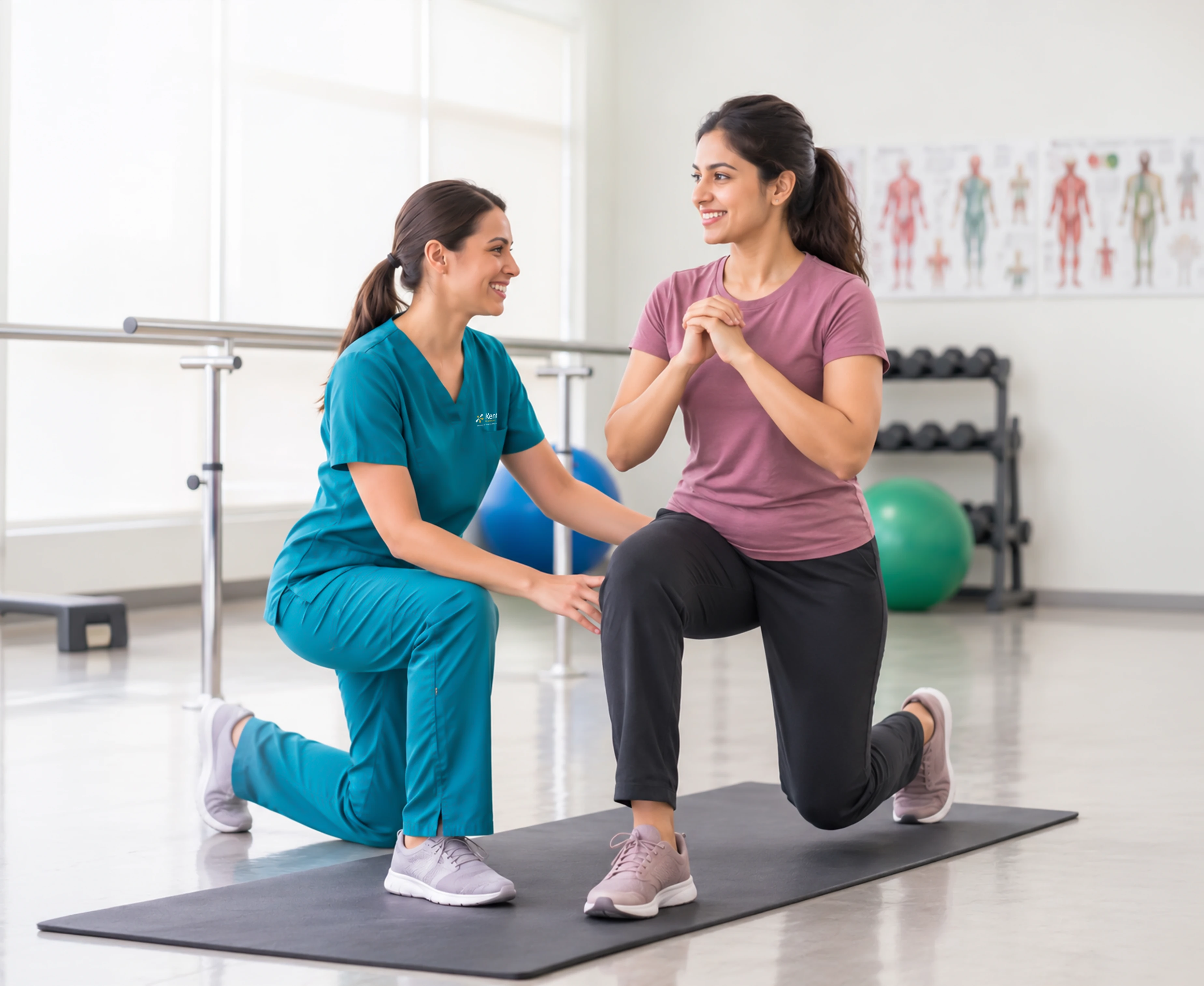
Core & Functional Training at Kent Healthcare
Core and functional training focuses on strengthening the muscles that support your spine, pelvis, and body during movement. It goes beyond abdominal exercises to improve how different muscle groups work together during everyday activities.
At Kent Healthcare, our programs are planned around your physical abilities, movement patterns, and individual goals. Through guided exercises and progressive training, we work on improving stability, posture, balance, coordination, and functional strength.
Whether you are returning to activity after a period of reduced mobility, looking to improve physical performance, or building a stronger foundation for everyday movement, your program is tailored to your needs.
When Can Core & Functional Training Help?
A structured training program may be beneficial if you experience:
- Reduced Core Strength — Difficulty maintaining stability during movement or physical activity.
- Postural Challenges — Difficulty maintaining comfortable alignment while sitting, standing, or moving.
- Poor Balance — Feeling unsteady during walking, standing, or changes in direction.
- Movement Difficulties — Challenges with bending, reaching, lifting, squatting, or getting up from a seated position.
- Reduced Endurance — Getting tired during routine physical activities.
- Limited Coordination — Difficulty controlling or coordinating movements.
- Reduced Physical Fitness — Difficulty returning to regular exercise or maintaining an active routine.
- Recovery After Inactivity — Reduced strength and mobility following illness, injury, or prolonged inactivity.
Our Core & Functional Training Services
Our individualized programs combine targeted strengthening with movement-based exercises to support better physical function.
- Core Stability Training — Exercises that strengthen the deep abdominal, back, and pelvic muscles to support trunk stability.
- Deep Core Activation — Guided exercises that improve awareness and coordination of the muscles supporting the spine and pelvis.
- Strength Training — Progressive exercises to improve muscle strength and support everyday physical demands.
- Balance Training — Activities that develop postural control, stability, and confidence during movement.
- Functional Movement Training — Practice of everyday movements such as squatting, bending, reaching, lifting, and standing.
- Postural Training — Exercises that improve body awareness, alignment, and movement habits.
- Coordination Training — Guided activities that improve control and coordination between different muscle groups.
- Endurance Training — Progressive exercises to support stamina and sustained physical activity.
- Mobility Exercises — Movement routines that support joint mobility and comfortable movement.
- Home Exercise Programs — Personalized routines to help maintain progress between sessions.
Your Pathway to Progress
- Initial Assessment — We assess your core strength, posture, balance, mobility, coordination, and functional movement to understand your current abilities and identify areas that need attention.
- Personalized Goal Setting — Your therapist works with you to establish practical goals based on your daily activities, fitness level, physical needs, and personal priorities.
- Core Activation & Stability — Training begins with appropriate exercises to develop core awareness, muscle coordination, and control during basic movements.
- Progressive Strength Training — As your ability improves, exercises are gradually progressed to build strength, endurance, and stability.
- Functional Movement Practice — You work on practical movement patterns such as standing, sitting, squatting, reaching, lifting, and walking, depending on your goals.
- Progress Review & Home Guidance — Your program is reviewed regularly. You receive guidance on maintaining your exercise routine and applying improved movement control to everyday activities.
Why Does Training Begin With an Assessment?
Core weakness is not the same for everyone. Some people may have reduced muscle strength, while others may experience poor coordination, limited mobility, balance difficulties, or challenges controlling movement.
Starting with an assessment helps us understand these differences and select exercises that match your current ability. It also helps determine how to progress your program safely and effectively.
How Do We Track Your Progress?
Progress is reviewed through functional and physical assessments suited to your goals. These may include:
- Core muscle strength and activation.
- Trunk stability and control.
- Postural alignment and movement patterns.
- Balance and coordination.
- Joint mobility and flexibility.
Your program is adjusted based on your response to exercise and changes in your physical abilities.
Frequently asked questions
What is core and functional training?
Core and functional training combines exercises that strengthen the muscles supporting your trunk with movement-based activities that improve strength, balance, coordination, and everyday physical function.
Is core training the same as abdominal exercises?
No. Core training involves more than the abdominal muscles. It also works on the muscles around the spine, pelvis, and trunk to support stability and coordinated movement.
Who can benefit from functional training?
It may benefit people looking to improve their physical strength, balance, mobility, coordination, and ability to perform daily activities. Programs are adapted to individual needs and abilities.
Can core training help with back discomfort?
Core exercises may support trunk strength and movement control, which can be useful for some people with back discomfort. However, the appropriate exercises depend on the underlying cause and individual assessment.
Do I need to be physically fit before starting?
No. Training can be adapted to your current fitness level, including if you are new to exercise or returning after a period of inactivity.
How often should I do core exercises?
The frequency depends on your goals, physical condition, and exercise tolerance. Your therapist can recommend a suitable schedule and guide you on progressing your routine.
How long does it take to see progress?
Progress varies depending on your starting point, consistency, goals, and response to exercise. Your therapist will review your performance and adjust your program as needed.
Can functional training improve balance?
Yes. Appropriate balance and coordination exercises can help develop postural control and stability during everyday movements.
Will I receive a home exercise program?
Yes. Where appropriate, your therapist will provide exercises and guidance to help you continue practicing between sessions.
Are the sessions one-to-one?
Kent Healthcare provides individualized rehabilitation and exercise guidance. Your program and level of supervision are based on your assessment and needs.