
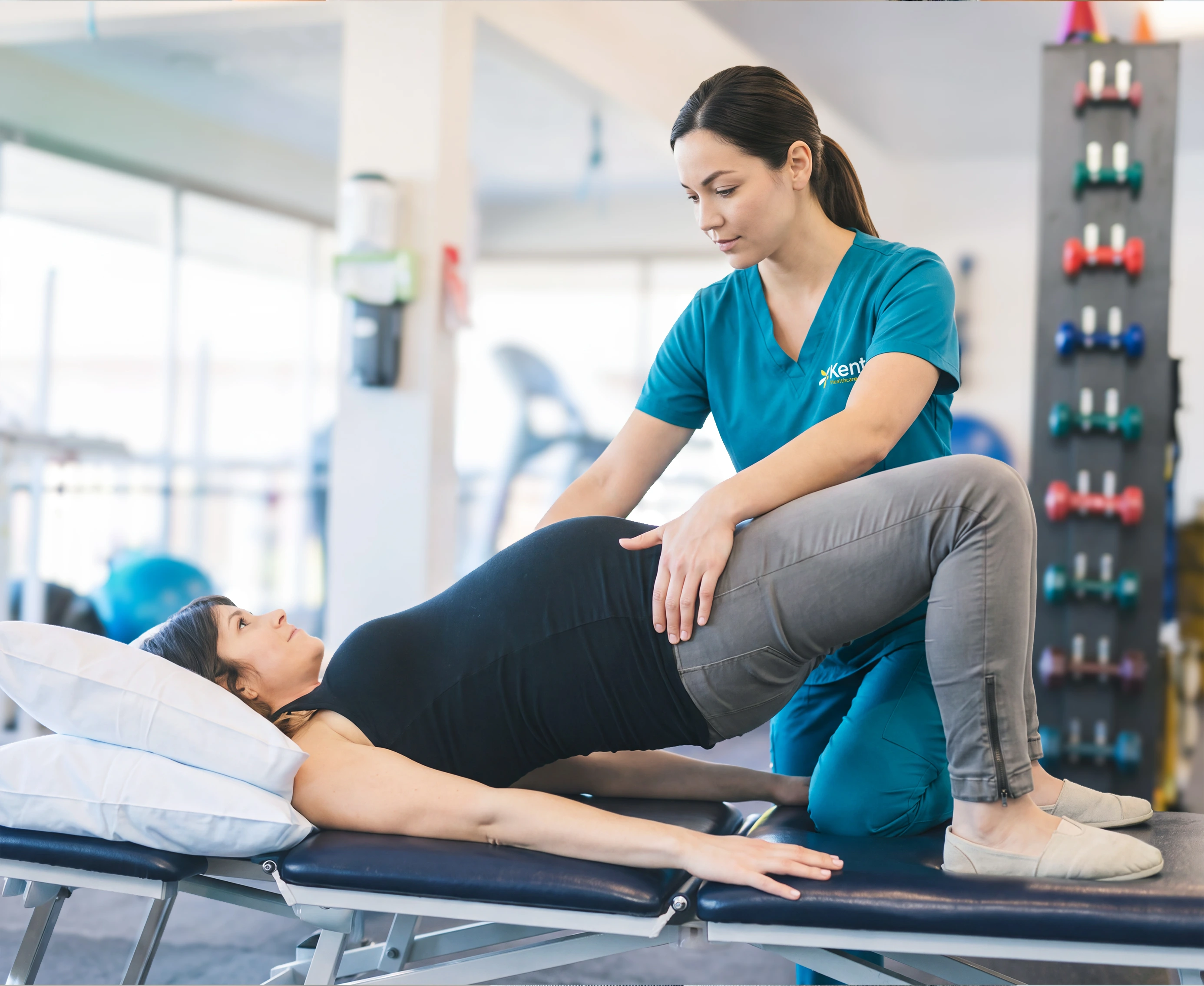
Diastasis Recti Correction
Diastasis recti is a condition in which the two sides of the rectus abdominis muscles, commonly known as the abdominal muscles, move apart as the connective tissue between them stretches. It is commonly associated with pregnancy, but it can also occur in other circumstances involving changes in abdominal pressure or muscle function.
At Kent Healthcare, our Women's Health physiotherapists provide individualized rehabilitation to address abdominal muscle separation and improve the way your core muscles work together.
Common Signs of Diastasis Recti
Diastasis recti can present differently from one person to another. Some common signs and associated concerns include:
- Abdominal Bulging: A visible bulge or ridge along the middle of the abdomen, particularly when sitting up, lifting or getting out of bed.
- Reduced Core Strength: Difficulty engaging the abdominal muscles or maintaining core support during physical activities.
- Changes in Abdominal Shape: A persistent gap or protruding appearance along the midline of the abdomen.
- Lower Back Discomfort: Back pain or discomfort that may be associated with changes in abdominal muscle function and movement patterns.
- Postural Changes: Difficulty maintaining comfortable posture during standing, walking or everyday activities.
- Movement Difficulties: Challenges with bending, lifting, exercising or performing movements that require abdominal control.
- Reduced Functional Support: Difficulty coordinating the abdominal muscles with breathing and pelvic floor muscles during physical activity. Not everyone with diastasis recti experiences pain or functional difficulties. If you notice abdominal separation or changes in core function, a physiotherapy assessment can help determine whether rehabilitation may be beneficial.
Diastasis Recti Correction at Kent Healthcare
At Kent Healthcare, our Women's Health physiotherapists develop rehabilitation plans based on your abdominal muscle function, physical condition and individual goals.
Your treatment may include:
- Detailed Abdominal Assessment: Evaluating the separation between the rectus abdominis muscles, connective tissue tension, abdominal muscle function, breathing patterns and core coordination.
- Deep Core Activation: Exercises that help improve the function and coordination of the deeper abdominal muscles, supporting better control during movement.
- Progressive Abdominal Strengthening: Gradually introducing suitable exercises to improve abdominal strength and control without placing unnecessary strain on the abdominal wall.
- Breathing Coordination: Breathing exercises that help coordinate the diaphragm, abdominal muscles and pelvic floor during different movements.
- Pelvic Floor Rehabilitation: Exercises to improve pelvic floor function where associated muscle weakness, poor coordination or other concerns are identified.
- Postural Correction: Guidance on posture, body mechanics and movement patterns to improve abdominal support during daily activities.
- Functional Movement Training: Practising everyday movements such as lifting, bending, sitting up and carrying objects with appropriate abdominal control.
- Exercise Progression: Gradually advancing your exercise program as your strength, coordination and movement control improve.
- Home Exercise Plans and Education: Personalized exercises and practical guidance to help you continue rehabilitation safely at home.
Pathway to Progress: Diastasis Recti Rehabilitation
Kent Healthcare follows a progressive approach to diastasis recti rehabilitation. Each stage is planned according to your assessment findings, current abilities and recovery goals.
Your program may include:
- Initial Assessment: Evaluating abdominal separation, muscle function, connective tissue tension, breathing and movement patterns.
- Core Awareness and Activation: Learning how to engage and coordinate your abdominal muscles during controlled movements.
- Deep Core Strengthening: Introducing appropriate exercises to improve abdominal muscle coordination and support.
- Progressive Strength Training: Gradually increasing exercise difficulty as your abdominal control and strength improve.
- Functional Movement Training: Applying improved muscle control to everyday activities such as lifting, bending and carrying.
- Return to Physical Activity: Building the strength and control required for a gradual return to exercise and fitness activities.
- Home Exercise Guidance: Following a suitable exercise routine to maintain progress and support long-term core function.
The duration of rehabilitation depends on the extent of muscle separation, abdominal function, associated symptoms and individual progress. Your physiotherapist will recommend the session frequency and overall program following your assessment.
Why Assessment Comes Before Abdominal Exercises
Diastasis recti is not simply a gap between two abdominal muscles. The way your abdominal wall responds to movement, pressure and muscle activation is equally important.
Two women may have a similar degree of separation but very different abdominal muscle function. One may experience good control during everyday activities, while another may notice bulging, difficulty engaging the core or discomfort during movement.
Following generic abdominal workouts without understanding your muscle function may place unnecessary demands on the abdominal wall or aggravate existing symptoms.
At Kent Healthcare, our physiotherapists assess abdominal separation, connective tissue tension, breathing patterns and core coordination before recommending exercises.
Based on these findings, your rehabilitation program is designed to address your specific needs and progress at a suitable pace. The focus is on improving abdominal muscle function and overall movement rather than simply reducing the measured gap.
If your assessment suggests an underlying medical concern or symptoms that require further investigation, our team can guide you towards the appropriate specialist.
Frequently asked questions
What is diastasis recti?
Diastasis recti is the separation of the two sides of the rectus abdominis muscles along the midline of the abdomen. It occurs when the connective tissue between these muscles stretches. It is commonly associated with pregnancy, although it can occur in other circumstances as well.
Can diastasis recti be corrected without surgery?
Many people with diastasis recti can improve abdominal muscle function and core strength through a structured physiotherapy program. Rehabilitation focuses on muscle coordination, progressive strengthening and functional movement. Surgery may be considered in selected cases, but it is not necessary for everyone.
How do I know if I have diastasis recti?
Some common signs include a visible bulge or ridge along the middle of your abdomen, particularly when sitting up or engaging your core. However, a visible gap alone does not confirm the condition. A physiotherapist or doctor can assess your abdominal muscles and determine whether diastasis recti is present.
Can diastasis recti occur after a C-section?
Yes. Diastasis recti can occur during pregnancy regardless of the delivery method. Women who have undergone a C-section may also experience changes in abdominal muscle function during recovery. Physiotherapy can help address these concerns once exercise is clinically appropriate.
Can I do abdominal exercises if I have diastasis recti?
Yes, but the exercises should be selected according to your abdominal muscle function and individual condition. Some movements may cause excessive abdominal bulging or difficulty maintaining control. Your physiotherapist will guide you through suitable exercises and progress them as your strength improves.
Can diastasis recti occur in women who have never been pregnant?
Yes. Although pregnancy is a common contributing factor, diastasis recti can also occur in women who have never been pregnant. Changes in abdominal pressure, body composition and other factors may contribute to abdominal muscle separation.