
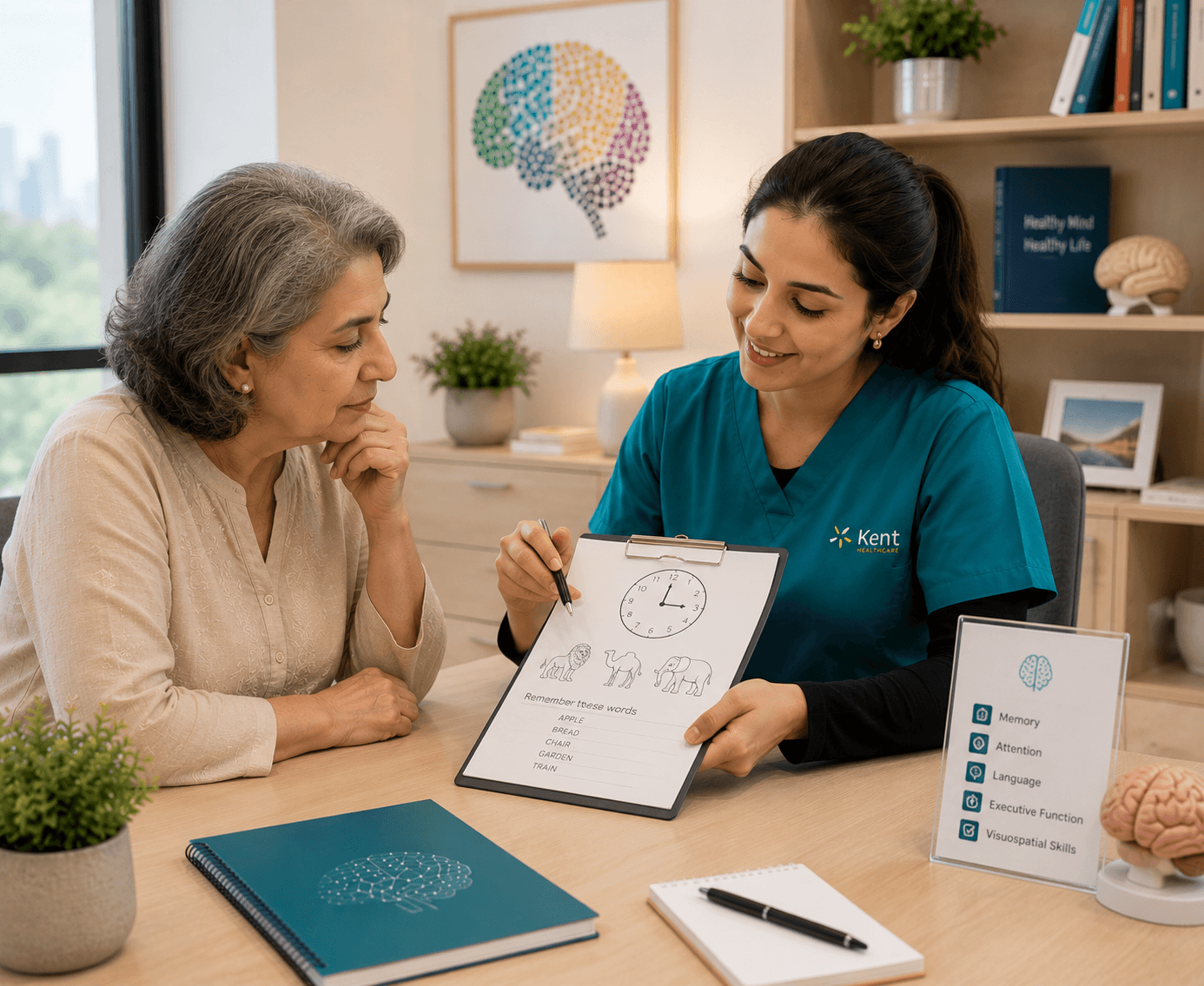
Memory concerns in older adults sit on a spectrum. Some reflect normal age-related cognitive change. Some reflect treatable causes (depression, sleep disorders, medications, vitamin deficiencies). Some reflect mild cognitive impairment that may or may not progress. Some reflect early dementia. Distinguishing these requires structured assessment—not reassurance, and not a single screening test.
What the memory clinic provides
Initial cognitive screening to determine whether further assessment is warranted. Full neuropsychological assessment when indicated—a multi-hour battery covering attention, memory, language, executive function, and visuospatial ability. Written report with diagnostic impressions and recommendations. Coordination with the patient's neurologist, geriatrician, or primary care physician. Annual or six-monthly follow-up cognitive monitoring for patients on a cognitive change pathway. Family education and support.
Who should consider an assessment
Older adults (typically 60+) noticing memory or cognitive changes that concern them or their family. Patients whose primary care physician has raised concerns about cognition. Patients with new or worsening cognitive symptoms after a stroke, brain injury, or significant illness. Patients with a family history of early-onset dementia who want a baseline. Patients on neurology pathways where serial cognitive testing is part of disease monitoring.
Working with the medical team
We do not make formal dementia diagnoses—that is the role of the patient's neurologist or geriatrician. We provide the cognitive assessment data that informs the diagnostic process and we monitor cognition over time for patients already in a dementia care pathway. We coordinate closely with the rest of the patient's medical team and refer onward when our assessment identifies issues that need medical workup.
Outcome measures we use
- Montreal Cognitive Assessment (MoCA)
- Addenbrooke's Cognitive Examination (ACE-III)
- Repeatable Battery for the Assessment of Neuropsychological Status (RBANS)
- Wechsler Memory Scale Subtests
- Trail Making Test
- Functional Activities Questionnaire
- Informant-Report Measures
Who leads this work at Kent
The Memory Clinic at Kent is led by Nihal Muneer, DHA-licensed clinical neuropsychologist with specific training in older-adult cognitive assessment.
Frequently asked questions
Is forgetfulness in my 70s normal?
Some cognitive change with age is normal—slower processing, occasional word-finding difficulty, needing to write things down more. Significant memory loss, getting lost in familiar places, repeating questions within a short period, or trouble with daily tasks is not normal age-related change and warrants assessment.
Do you diagnose dementia?
We provide the cognitive assessment data that informs a dementia diagnosis. The formal diagnosis is made by a neurologist or geriatrician, integrating our assessment with their clinical examination, imaging, and blood work. We work alongside the medical team.
Will the assessment tell me if I'm going to get dementia?
It will give a clear picture of current cognitive function and identify whether you meet criteria for mild cognitive impairment or other cognitive disorders. It cannot predict the future definitively—but baseline assessment combined with follow-up monitoring is the most accurate way to track cognitive trajectory.
My family is concerned but I'm not—should I come?
If family is noticing changes that you're not, that itself is sometimes diagnostically meaningful. An assessment can either reassure (if cognition is intact) or identify something that benefits from earlier intervention. Either outcome is useful.
Is the memory clinic covered by insurance?
Coverage for cognitive assessment varies by insurer and policy. Contact us with your insurance details and we will verify before booking. Implementation note This document is the finalized content. For the strategic foundation, SEO/AEO rationale, schema markup map, internal linking architecture, and phased rollout plan, see BBP Vol. VIII (companion volume). Before publication, complete every [bracketed placeholder] in this document. The most important are: real clinician names with DHA license numbers on every Practice page and condition lead block; at least one real aggregate outcome figure on /outcomes; the actual insurance partner list on /insurance-and-fees; and confirmed self-pay fees throughout. The site can be built around these placeholders, but it should not be published with them still in place. Voice and entity consistency are non-negotiable. The canonical Kent brand description (defined in Vol. VIII section 3.2) must be used identically across kenthealthcare.ae, Google Business Profile, LinkedIn, Facebook, Instagram, Doctify, Practo, and every directory listing. Brief every external touchpoint—front-desk script, hold music, recruitment posts, paid ad copy—on the canonical language. Stop using "beacon of hope." Stop using "disabled persons." One terminology, everywhere. This is what the rebuild looks like. The hard work begins after approval. BBP Strategic Advisory Vol. IX · Website Content Finalized · Confidential