
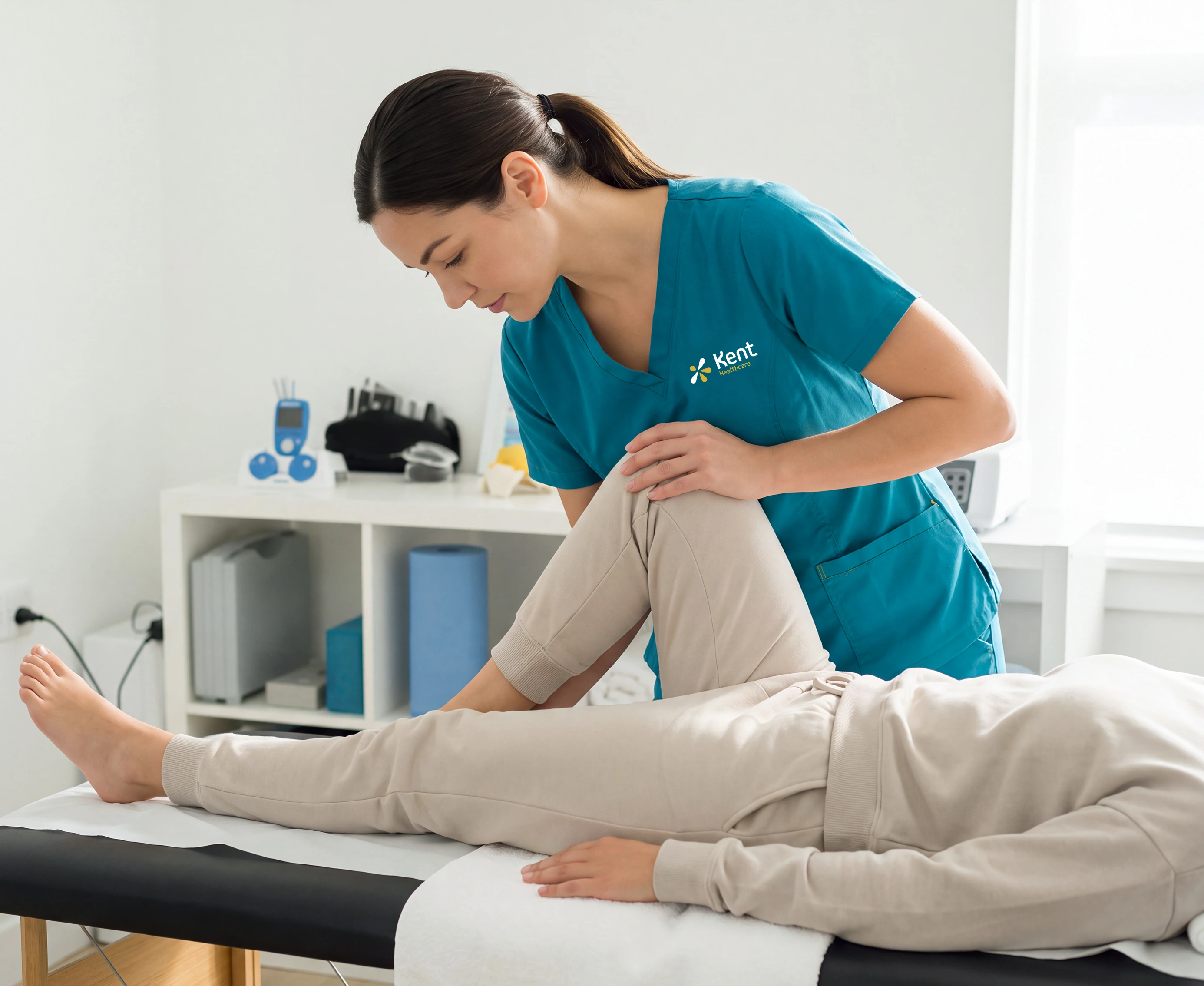
Pelvic Floor Physiotherapy
Pelvic floor physiotherapy at Kent Healthcare is provided by our Women's Health physiotherapists. It includes a detailed assessment, pelvic floor exercises, relaxation techniques, manual therapy, bladder and bowel training, breathing exercises and guidance to help you manage your symptoms.
Women visit Kent Healthcare for pelvic floor support at different stages of life. This may be during or after pregnancy, after surgery, during menopause or even without any clear reason. Some women come with a diagnosis from their gynecologist or urologist, while others seek help because of symptoms such as urine leakage, pelvic heaviness or pain. At Kent Healthcare, we support women at every stage of their journey.
Common Signs of Pelvic Floor Problems
Pelvic floor problems can affect women in different ways. Some common signs include:
- Bladder: Urine leakage when coughing, sneezing, laughing, or exercising; a sudden urge to urinate; frequent urination; or difficulty emptying the bladder fully.
- Bowel: Difficulty controlling gas or bowel movements, constipation, straining, or feeling that the bowel has not emptied completely.
- Pelvic Support: A feeling of heaviness, pressure, or a bulge in the vaginal area.
- Pain and Intimacy: Pain in the pelvic area, lower back or hips; pain during intercourse; or discomfort when using tampons or during medical examinations.
- Daily Activities: Avoiding exercise, travel, or social activities because of symptoms, or continuing to experience discomfort after childbirth or surgery.
These symptoms are common, but they can affect each woman differently. If you experience any of these concerns, a pelvic floor assessment at Kent Healthcare can help identify the cause and guide your care.
Pelvic Floor Physiotherapy at Kent Healthcare
At Kent Healthcare, our women's health physiotherapists create treatment plans based on each woman's needs. Your care may include:
- Detailed Assessment: Checking your posture, breathing, core muscles and pelvic floor function. An internal examination may be recommended if it is clinically helpful and only with your consent.
- Pelvic Floor Exercises: Exercises to improve muscle strength, control and endurance when the muscles are weak.
- Relaxation Techniques: Exercises and techniques to relax pelvic floor muscles that are too tight or overactive.
- Bladder and Bowel Training: Guidance on fluid intake, toilet habits and bowel routines to help manage symptoms.
- Manual Therapy and Pain Management: Hands-on techniques to help reduce pelvic pain and discomfort during intercourse.
- Core and Breathing Exercises: Exercises that help coordinate your pelvic floor muscles with your breathing, abdominal muscles and back.
- Postnatal and Post-Surgical Rehabilitation: Support with recovery after childbirth, hysterectomy or other pelvic surgeries.
- Home Exercise Plans and Education: Simple exercises and practical guidance to help you continue your progress at home.
- Coordination with Specialists: Working with obstetricians, gynecologists and other healthcare specialists when needed.
Pathway to Progress: Pelvic Floor Rehabilitation
Kent Healthcare offers a structured approach to pelvic floor rehabilitation. The program may include an initial assessment, pelvic floor exercises, relaxation techniques, manual therapy, bladder and bowel training, and a home exercise plan.
The duration may range from 6 to 12 weeks, depending on the final program structure and your individual needs. The number of sessions and their frequency will be decided by your physiotherapist after your assessment.
Why Assessment Comes Before Exercise?
Pelvic floor problems are not the same for everyone. While some women have weak pelvic floor muscles that need strengthening, others have tight muscles that need relaxation. In such cases, doing only strengthening exercises may make the symptoms worse.
At Kent Healthcare, our physiotherapists first assess your pelvic floor function to understand what your body needs. Based on the findings, they create a treatment plan that suits your condition and goals.
If your symptoms require care from another specialist, such as a urogynecologist or colorectal specialist, Kent Healthcare will guide you towards the right medical support.
How We Track Your Progress
At Kent Healthcare, we use suitable assessment tools to understand your symptoms and monitor your progress throughout rehabilitation.
These may include:
- Urinary leakage assessment
- Pelvic Floor Distress Inventory
- Pelvic Floor Impact Questionnaire
The assessment tools used will depend on clinical requirements and the measures confirmed by the therapist.
Frequently Asked Questions
Can I visit Kent Healthcare if I have symptoms but no diagnosis?
Yes. You do not need a medical diagnosis to book an assessment at Kent Healthcare. Our physiotherapist will understand your symptoms, assess your condition, and explain the possible causes. If you need to see a doctor first, we will guide you accordingly.
When should I start pelvic floor physiotherapy?
You can start as soon as you notice symptoms that affect your comfort or daily activities. If you are recovering after childbirth, your physiotherapist will guide you on the right time to begin. You do not have to wait until your symptoms become severe.
Do I need to be pregnant or have had a baby to benefit from pelvic floor physiotherapy?
No. Pelvic floor problems can affect women at any stage of life, including those who have never been pregnant. Women going through menopause or recovering from surgery may also benefit from pelvic floor physiotherapy at Kent Healthcare.
Will I have to do pelvic floor exercises forever?
Not necessarily. Many women follow a structured rehabilitation plan and continue with a simple maintenance routine afterwards. Your physiotherapist at Kent Healthcare will guide you based on your progress and needs.
Will my sessions be in a group or one-to-one?
All pelvic floor assessments and treatment sessions at Kent Healthcare are private and conducted on a one-to-one basis.
Does Kent Healthcare coordinate with my doctor?
Yes. With your permission, our physiotherapists can coordinate with your obstetrician, gynecologist or other treating specialists to support your rehabilitation.