
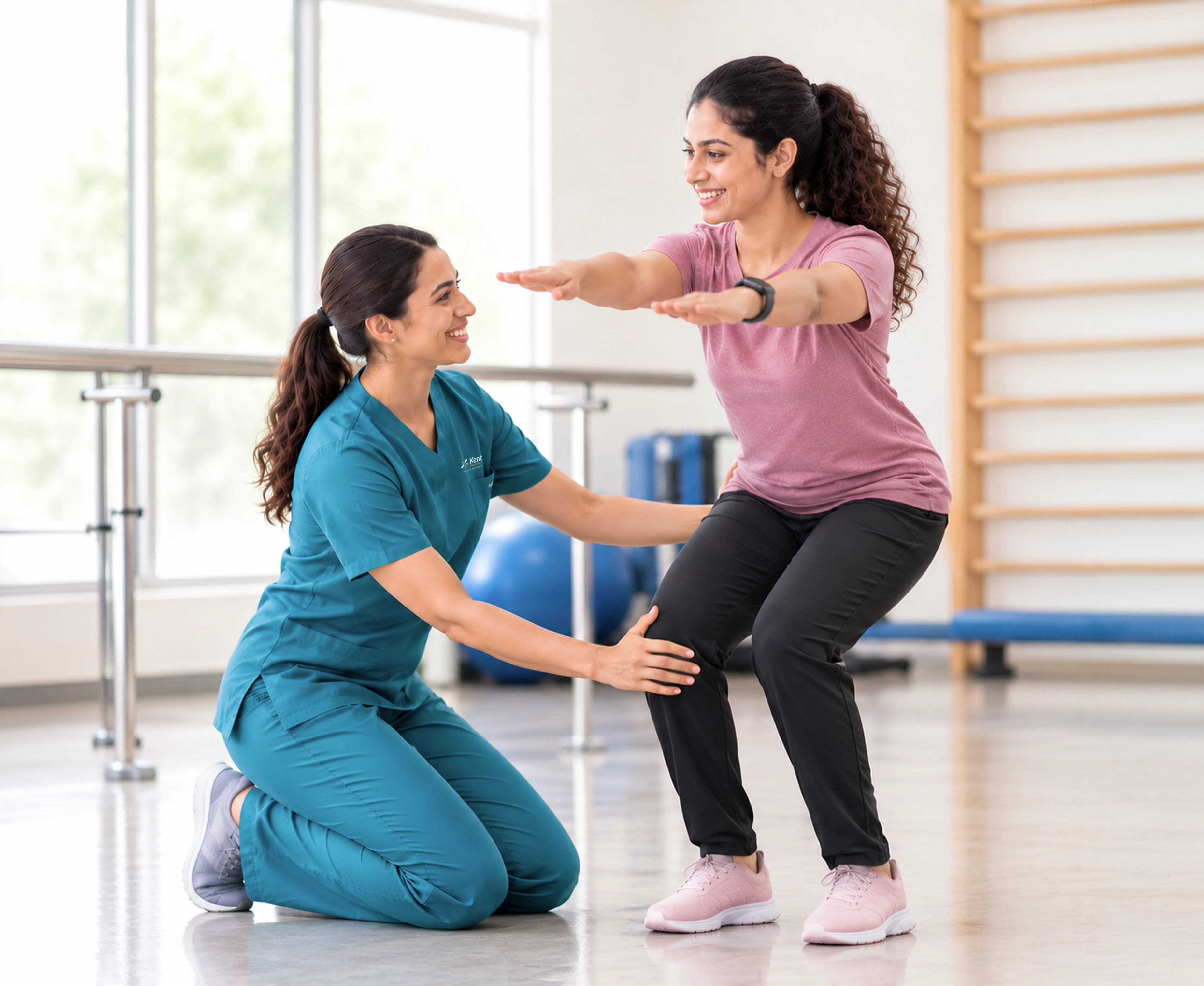
Post-Surgical Rehabilitation at Kent Healthcare
Surgery is often an important step toward improving your health and physical function. However, recovery does not end after the procedure. You may experience reduced muscle strength, stiffness, limited mobility, discomfort, or difficulty performing everyday activities.
Post-surgical rehabilitation helps address these challenges through structured exercises and individualized care. At Kent Healthcare, our physiotherapists assess your condition, understand your surgical history, and develop a rehabilitation plan based on your recovery stage and medical recommendations.
From restoring joint movement and rebuilding muscle strength to improving balance and functional mobility, each stage of your program is guided by your progress and goals.
When Can Post-Surgical Rehabilitation Help?
Rehabilitation may be recommended after different types of surgery, including:
- Orthopedic Surgery — Joint replacement, fracture fixation, ligament reconstruction, and other bone or joint procedures.
- Spinal Surgery — Procedures involving the spine that may require support with mobility, posture, and strength.
- Neurological Surgery — Procedures that may affect movement, coordination, balance, or functional independence.
- Abdominal Surgery — Procedures that may require gradual restoration of mobility and functional strength.
- Other Major Surgeries — Procedures that result in reduced mobility, muscle weakness, or difficulty returning to daily activities.
You may benefit from rehabilitation if you experience:
- Reduced muscle strength or endurance.
- Joint stiffness or restricted movement.
- Difficulty walking or maintaining balance.
- Pain or discomfort during movement.
- Reduced flexibility and mobility.
- Difficulty with daily activities such as sitting, standing, or climbing stairs.
- Reduced confidence in movement.
- Difficulty returning to work, exercise, or regular routines.
Our Post-Surgical Rehabilitation Services
Your rehabilitation program is designed around the procedure you have undergone, your current physical abilities, and your recovery goals.
- Pain & Swelling Management — Appropriate rehabilitation techniques and movement guidance to help manage post-operative discomfort and swelling.
- Range of Motion Exercises — Guided exercises to improve joint mobility and reduce stiffness within medically permitted limits.
- Muscle Strengthening — Progressive exercises to rebuild strength in affected and supporting muscle groups.
- Gait Training — Walking practice and mobility exercises to improve walking patterns and confidence.
- Balance & Coordination Training — Exercises to improve stability, body control, and safe movement.
- Core & Postural Training — Exercises to improve trunk stability, posture, and movement control where appropriate.
- Functional Movement Training — Practice of everyday activities such as standing, sitting, reaching, and climbing stairs.
- Mobility & Flexibility Exercises — Guided movements to support comfortable movement and functional mobility.
- Endurance Training — Gradual exercise progression to improve stamina and activity tolerance.
- Home Exercise Programs — Individualized exercises and guidance to support recovery between rehabilitation sessions.
Your Pathway to Progress
- Post-Surgical Assessment
We review your surgical history, medical recommendations, current symptoms, mobility, strength, and functional abilities. Your rehabilitation begins only when appropriate for your stage of recovery and medical clearance.
- Early Mobility & Movement
Where permitted, guided exercises help you begin restoring comfortable movement, maintaining circulation, and gradually increasing activity.
- Mobility & Strength Development
As healing progresses, your program focuses on improving joint movement, muscle strength, flexibility, and control.
- Balance & Functional Training
You work on practical movements such as walking, standing, transferring, reaching, and other activities relevant to your daily routine.
- Progressive Activity Training
Exercises are gradually adjusted to improve endurance, coordination, and the ability to manage more demanding activities.
- Progress Review & Continued Guidance
Your therapist reviews your recovery, updates your exercise program, and provides guidance for continuing rehabilitation at home and returning to your regular activities.
Why Does Post-Surgical Rehabilitation Need an Individualized Approach?
Recovery differs depending on the type of surgery, the tissues involved, your general health, and the stage of healing. An exercise that is suitable after one procedure may not be appropriate after another.
A detailed assessment helps your therapist understand your current limitations and follow the precautions set by your surgeon. Your rehabilitation plan is then progressed according to your response, healing, and functional goals.
How Do We Track Your Recovery?
Your progress is monitored through regular assessments that may include:
- Pain and discomfort levels.
- Joint range of motion.
- Muscle strength and endurance.
- Walking ability and gait pattern.
- Balance and coordination.
- Posture and movement control.
- Functional mobility and daily activity performance.
- Ability to return to relevant work, exercise, and routine activities.
Reassessment helps identify improvements, address ongoing limitations, and determine when your program can be progressed.
Frequently Asked Questions
What is post-surgical rehabilitation?
Post-surgical rehabilitation is a structured program of exercises and therapeutic guidance designed to help restore movement, strength, mobility, balance, and functional independence after surgery.
When should I start rehabilitation after surgery?
The starting point depends on the type of surgery, your healing progress, and your surgeon's instructions. Some procedures allow early movement, while others require a longer period of protection before rehabilitation begins.
Do I need a doctor's referral?
Requirements may vary depending on the procedure and your medical condition. Your surgeon's recommendations and any required medical clearance should be reviewed before beginning rehabilitation.
Can rehabilitation help reduce stiffness after surgery?
Yes. Appropriate mobility exercises can help improve joint movement and address stiffness. The exercises and their intensity must be suitable for your surgical procedure and healing stage.
Will rehabilitation be painful?
Some exercises may involve mild discomfort or muscle effort. Your therapist will monitor your response and adjust the program. Significant or worsening pain should be reported and medically assessed.
How long does post-surgical rehabilitation take?
Recovery timelines vary based on the procedure, individual healing, physical condition, and rehabilitation goals. Your therapist will review your progress and guide you through each stage.
Can I exercise at home after surgery?
Yes, when your medical team permits it. Your therapist can provide a home exercise program with clear instructions on suitable movements, frequency, and precautions.
Can rehabilitation help me return to sports or exercise?
Rehabilitation can support a gradual return to physical activity by developing strength, mobility, balance, and functional capacity. The timing depends on your procedure and medical clearance.