
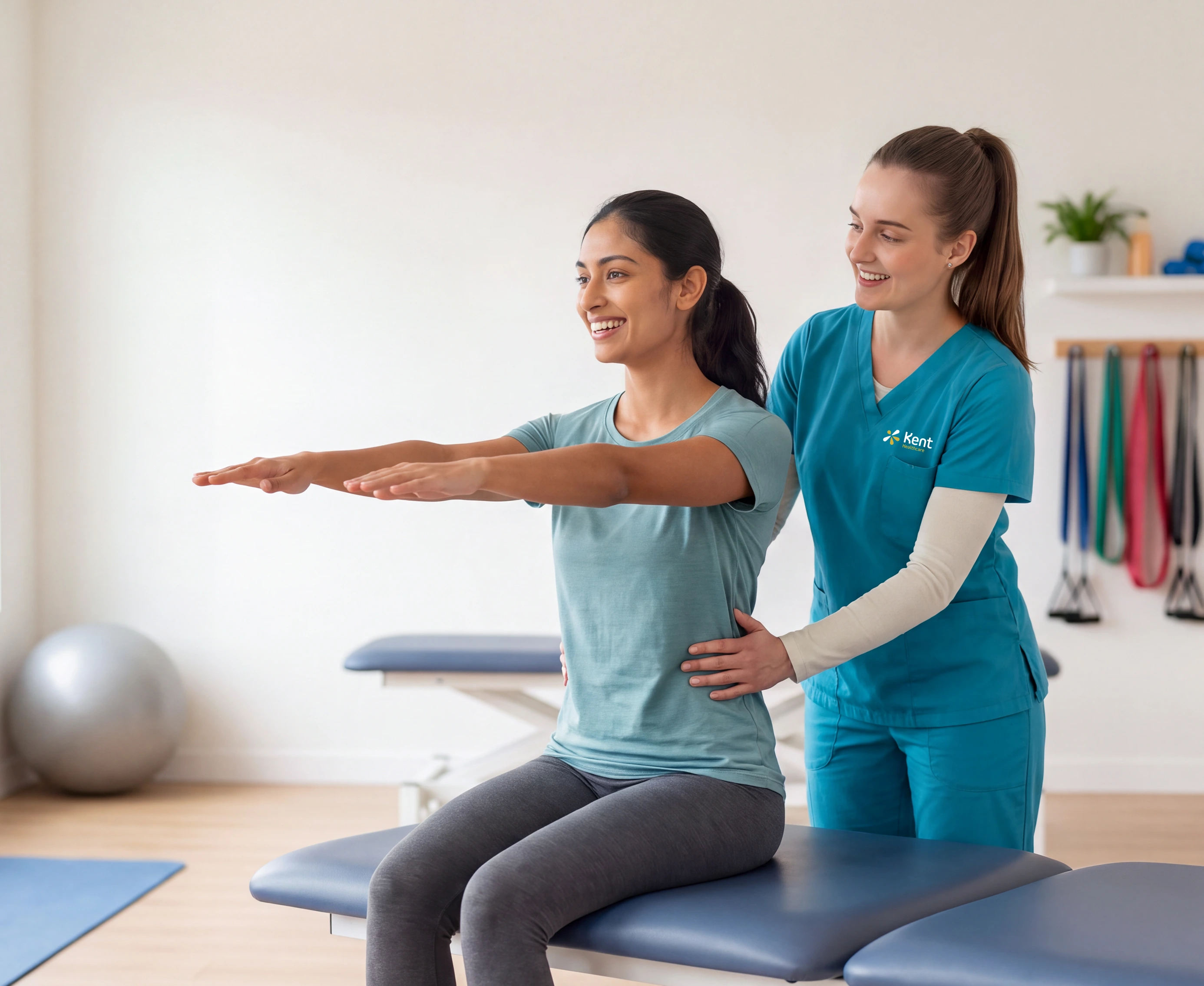
Postnatal Physiotherapy
Postnatal physiotherapy at Kent Healthcare focuses on supporting your physical recovery after childbirth. Our women's health physiotherapists use a combination of detailed assessment, pelvic floor rehabilitation, core exercises, breathing techniques, posture correction, and movement training to address concerns that may arise after delivery. Whether you have had a vaginal delivery or a C-section, your body needs time and appropriate support to recover. At Kent Healthcare, we assess your individual concerns and develop a rehabilitation plan that considers your delivery experience, recovery stage and personal goals.
Common Concerns After Childbirth
Every woman's recovery is different. Some physical concerns may improve naturally, while others benefit from professional physiotherapy support. These may include:
- Pelvic Floor Changes: Urine leakage during coughing, sneezing or physical activity, difficulty controlling bowel movements, pelvic heaviness or a feeling of pressure in the vaginal area.
- Abdominal Muscle Changes: Reduced abdominal strength, abdominal muscle separation (diastasis recti), difficulty engaging the core or reduced support during everyday movements.
- Back and Pelvic Pain: Discomfort in the lower back, hips, pelvis or tailbone, particularly while lifting your baby, feeding or carrying out household activities.
- Postural Discomfort: Neck, shoulder and upper back pain associated with prolonged feeding positions, carrying your baby or repeated bending.
- C-Section Recovery: Discomfort around the surgical area, restricted scar mobility after healing, abdominal weakness or difficulty returning to comfortable movement.
- Perineal Discomfort: Pain, tightness or sensitivity following vaginal delivery, including discomfort around the perineal area.
- Movement Difficulties: Difficulty getting out of bed, lifting, bending, walking for longer periods or returning to exercise.
- Intimacy-Related Concerns: Pelvic discomfort, pain during intercourse or changes in pelvic floor muscle function after childbirth. These concerns can affect your comfort and confidence during the postnatal period. A physiotherapy assessment can help identify the factors contributing to your symptoms and determine the support you may need.
Postnatal Physiotherapy at Kent Healthcare
At Kent Healthcare, our Women's Health physiotherapists create individualized rehabilitation plans based on your delivery experience, physical condition and recovery goals. Your sessions may include:
- Detailed Postnatal Assessment: Reviewing your pregnancy and delivery history, posture, breathing, abdominal muscles, pelvic floor function and movement patterns. An internal pelvic floor examination may be recommended when clinically appropriate and only with your consent.
- Pelvic Floor Rehabilitation: Exercises and techniques to improve pelvic floor strength, coordination and relaxation, depending on your muscle function and symptoms.
- Abdominal Muscle Rehabilitation: Exercises to improve deep core activation, abdominal muscle coordination and functional strength, including support for women experiencing diastasis recti.
- Back and Pelvic Pain Management: Suitable exercises, movement modifications and manual techniques to help manage discomfort in the lower back, pelvis and hips.
- Postural Correction: Practical guidance on comfortable feeding positions, lifting your baby, carrying techniques and everyday movements to reduce unnecessary physical strain.
- Breathing and Core Coordination: Exercises to reconnect breathing patterns with abdominal and pelvic floor muscle function.
- Return-to-Exercise Guidance: A gradual exercise plan to rebuild strength, mobility and endurance, based on your recovery and individual readiness.
- Perineal Rehabilitation: Appropriate exercises and techniques to address pelvic floor and perineal discomfort following vaginal delivery.
- Home Exercise Plans and Education: Simple exercises and practical recommendations to help you continue your recovery between physiotherapy sessions.
Pathway to Progress: Postnatal Rehabilitation
Kent Healthcare follows a structured approach to postnatal rehabilitation, with each stage adapted to your recovery and individual requirements. Your program may include:
- Initial Assessment: Reviewing your delivery history, current symptoms, physical function and recovery goals.
- Early Recovery Support: Introducing suitable breathing exercises, gentle movement and basic muscle activation according to your recovery stage.
- Pelvic Floor Rehabilitation: Working on muscle awareness, coordination, relaxation and strengthening where appropriate.
- Core Strengthening: Gradually improving abdominal muscle function, stability and coordination.
- Functional Movement Training: Practising everyday movements such as lifting, bending, walking and carrying your baby.
- Progressive Strengthening: Introducing suitable exercises to improve overall strength, mobility and endurance.
- Return to Daily Activities and Exercise: Supporting a gradual return to your usual physical activities based on your progress. The duration of postnatal rehabilitation may vary depending on your delivery, physical concerns and recovery goals. Your physiotherapist will recommend the number of sessions and their frequency following your assessment.
Why Postnatal Assessment Comes Before Exercise
After childbirth, your abdominal muscles, pelvic floor and surrounding tissues need time to recover. However, recovery does not look the same for every woman. Some women may experience reduced pelvic floor strength, while others may have difficulty relaxing or coordinating these muscles. Abdominal muscle separation, pelvic discomfort and scar-related restrictions may also influence how your body responds to exercise. Returning to strenuous exercise too soon or following a routine that does not address your specific needs may increase discomfort or aggravate existing symptoms. At Kent Healthcare, our physiotherapists assess your muscle function, movement patterns and recovery before recommending exercises. This helps ensure that your rehabilitation program progresses at a suitable pace and addresses the areas that need attention. If your symptoms suggest a concern that requires medical evaluation, our team can guide you towards the appropriate specialist.
How We Track Your Progress
At Kent Healthcare, we use appropriate assessment methods to understand your recovery and monitor changes in physical function throughout postnatal rehabilitation. These may include:
- Pelvic floor muscle function assessment
- Abdominal muscle separation and function assessment
- Urinary and bowel symptom assessment
- Posture and movement assessment
- Core strength and functional mobility assessment
- Pain and discomfort monitoring The assessment methods used will depend on your symptoms, recovery stage and the clinical requirements identified by your physiotherapist.
Frequently asked questions
When should I start postnatal physiotherapy?
The right time depends on your delivery, recovery and medical condition. Some women may benefit from an early postnatal assessment, while others may need to wait until they have received medical clearance. Your physiotherapist at Kent Healthcare will guide you on when to begin and which exercises are suitable for your recovery stage.
Can I benefit from postnatal physiotherapy after a C-section?
Yes. Postnatal physiotherapy can support recovery after both vaginal and C-section deliveries. Following a C-section, your program may focus on comfortable movement, breathing, gradual core rehabilitation, posture and scar mobility once the incision has healed and medical clearance has been obtained.
Will postnatal physiotherapy help with urine leakage after childbirth?
Yes. Urine leakage can occur after childbirth due to changes in pelvic floor muscle function. A pelvic floor assessment can help identify whether your muscles need strengthening, relaxation or coordination training. Your physiotherapist will recommend an appropriate rehabilitation plan.
Can I start postnatal physiotherapy if I am breastfeeding?
Yes. Breastfeeding does not automatically prevent you from participating in postnatal physiotherapy. Your physiotherapist can recommend suitable exercises and provide guidance on comfortable feeding postures, movement and managing physical strain while caring for your baby.
How long does postnatal recovery take?
Recovery varies from woman to woman and depends on factors such as delivery type, physical condition, symptoms and individual health needs. Some women regain comfortable movement relatively quickly, while others may need a longer rehabilitation program. Your physiotherapist will monitor your progress and adjust your plan accordingly.
Do I need to have pelvic floor problems to benefit from postnatal physiotherapy?
No. Postnatal physiotherapy can also support women who want to rebuild abdominal strength, improve posture, restore physical function and return to exercise after childbirth. An assessment helps identify the areas that may benefit from rehabilitation.
Are postnatal physiotherapy sessions conducted one-to-one?
Yes. Postnatal physiotherapy assessments and treatment sessions at Kent Healthcare are conducted privately on a one-to-one basis. This allows your physiotherapist to focus on your recovery, monitor your progress and modify your program as needed.
Does Kent Healthcare coordinate with my doctor?
Yes. With your permission, our physiotherapists can coordinate with your obstetrician, gynecologist or other treating specialists when necessary. This helps ensure that your rehabilitation plan considers your medical history and recovery requirements.