
Sensory processing differences mean a child's nervous system takes in and responds to sound, touch, movement or smell in a different way, which can make everyday life harder. Structured occupational therapy with sensory integration helps many children cope more comfortably at home and at school.
Sensory differences affect children on the autism spectrum, children with ADHD or developmental coordination disorder, and many children with no specific diagnosis. When they interfere with eating, dressing, sleeping, learning or friendships, an assessment is worthwhile.
What are sensory processing differences?
Every child's brain organizes sensory information from the body and the world. When that process works differently, ordinary experiences can feel overwhelming, too faint or hard to make sense of.
Sensory processing differences are well recognised clinically, but they are not classified as a stand-alone diagnosis in the major diagnostic manuals. That does not make them less real. Sensory reactivity is, in fact, part of the diagnostic picture of autism. A good assessment looks at what your child experiences and how it affects daily life, rather than relying on a label.
Signs your child may have sensory processing difficulties
- Distress with everyday sounds, textures, smells or movement
- Trouble with food textures, or a very narrow range of foods
- Trouble with clothes: tags, seams, socks or certain fabrics
- Difficulty calming down after being upset
- Constant seeking of intense input, such as crashing, spinning or jumping
- Difficulty in busy places such as malls, restaurants, buses or school canteens
- Clumsiness, difficulty with posture, or trouble planning and sequencing movements
Many children show some of these at times. It is the pattern, and the impact on daily life, that matters.
What we treat
- Sensory over-responsivity: children distressed by sounds, textures, movement or smells
- Sensory under-responsivity: children who do not notice or respond to typical sensory input
- Sensory seeking: children who need intense input to feel regulated
- Sensory discrimination difficulties: trouble making sense of sensory information
- Sensory-based motor difficulties: posture and praxis (motor planning) problems
- Sensory regulation issues in children with autism, ADHD, developmental coordination disorder and other neurodevelopmental profiles
Our program: Sensory Foundations
Sensory Foundations is a structured pediatric occupational therapy program built around sensory integration principles.
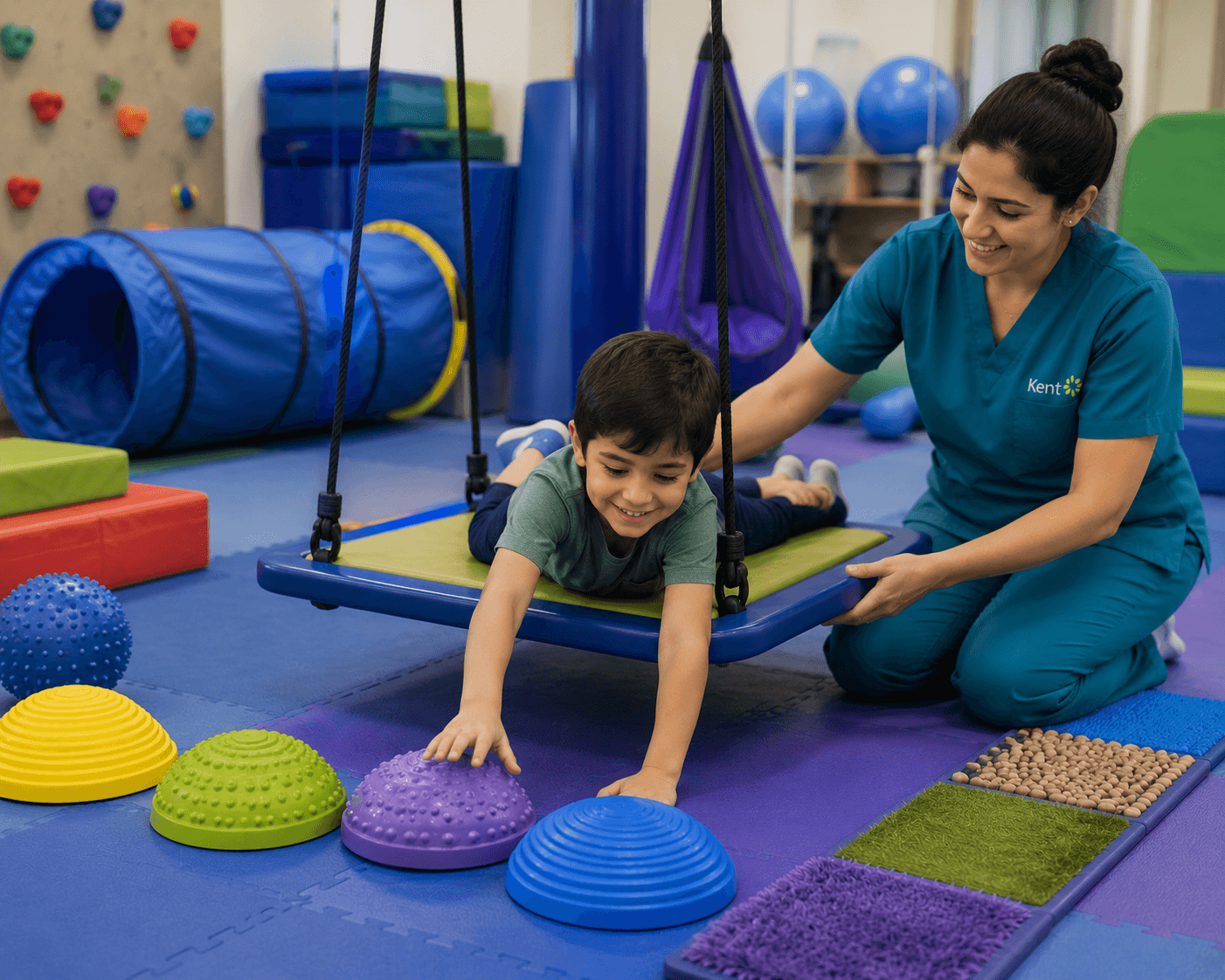
Sessions take place in our sensory gym, which includes suspended equipment such as swings and hammocks, vestibular and proprioceptive tools, tactile materials, and the space to deliver sensory integration interventions through play.
Our approach
- Comprehensive sensory assessment using validated tools.
- A treatment plan with goals for daily-life function, not just sensory tolerance in isolation.
- Sensory integration intervention delivered in the gym.
- Parent coaching on extending the work into home routines (the sensory diet).
- School coordination where sensory issues affect classroom function.
Your child's journey at Kent
- Assessment. A 45-minute assessment with validated tools and a conversation with you about your child's day.
- Goals. Specific goals that matter to your family, such as tolerating haircuts, joining a class or eating a wider range of foods.
- Sensory gym sessions. Play-based therapy matched to your child's sensory profile.
- Home routines. A sensory diet of simple activities built into your day.
- School link-up. Shared strategies with teachers where needed.
- Review. Regular re-measurement against your goals, with the plan adjusted as your child grows.
How we measure progress
- Sensory Profile-2
- Sensory Integration and Praxis Tests (SIPT) where available
- Goal Attainment Scaling
- Parent-Reported Function in Daily Routines
When should you seek help?
Book an assessment if sensory differences are interfering with eating, dressing, sleeping, learning, play or family outings.
Speak to your pediatrician promptly if your child has lost skills they previously had, has very limited eating with weight loss, or has marked changes in behavior. Sensory therapy works best alongside a full picture of your child's development.
Where we treat
Sensory integration sessions take place in our sensory gym in Al Mankhool, Bur Dubai, above Emirates NBD. Kent Healthcare is licensed by the Dubai Health Authority (DHA-3478614). See our insurance and fees page for coverage details.
Related support: autism therapy, developmental delay treatment and speech delay treatment.
Who leads sensory integration therapy at Kent
Sensory integration therapy at Kent is led by Ayingbee Kakchingtabam, a DHA-licensed pediatric occupational therapist with specific sensory integration training, in the Pediatric Neurodevelopment practice at Kent Healthcare, Bur Dubai.
Frequently asked questions
How do I know if my child has sensory processing issues?
Common signs include distress with everyday sounds, textures or movement; trouble with food textures; trouble with clothes such as tags, seams or fabrics; difficulty calming down; constant seeking of intense input such as crashing, spinning or jumping; and difficulty in busy environments. If any of these are interfering with daily life, an assessment is appropriate.
Is sensory processing disorder a real diagnosis?
Sensory processing differences are well recognised clinically but are not classified as a stand-alone diagnosis in the major diagnostic manuals. That does not make them less real, and structured occupational therapy with sensory integration helps many children.
Will sensory integration cure my child's issues?
The goal is not to eliminate sensory differences. It is to help your child function comfortably in daily life. For many children, structured therapy reduces sensory-related distress and improves daily function.
My child is autistic. Is sensory therapy useful?
Often yes. Sensory differences are part of autism for many children, and sensory integration support is one element of effective autism therapy at Kent.
Do you offer a sensory diet?
Yes, but a sensory diet is not a separate product. It is an individualised set of sensory activities and routines built into your child's daily life as part of the therapy plan. We coach families on what works for their specific child.
What is the difference between sensory processing differences and autism?
Sensory differences can occur on their own or alongside autism, ADHD or developmental coordination disorder. Autism also involves differences in social communication and behavior, which sensory differences alone do not explain. An assessment helps clarify what is going on.
My child is a very picky eater. Could that be sensory?
Sometimes. Strong reactions to food textures, smells or temperatures can be sensory-based. If your child eats a very limited range, is losing weight, or mealtimes are very distressing, speak to your pediatrician as well as booking an assessment.
What happens in a sensory integration session?
Sessions take place in our sensory gym, which includes suspended equipment such as swings and hammocks, vestibular and proprioceptive tools, tactile materials and space to move. Play-based activities are chosen to match your child's goals, and you receive coaching on how to extend the work into home routines.
Do you work with my child's school?
Yes, where sensory issues affect classroom function. We coordinate with your child's school so strategies are consistent between therapy, home and the classroom.
How do you measure progress in sensory therapy?
We use validated tools such as the Sensory Profile-2, the Sensory Integration and Praxis Tests where available, and Goal Attainment Scaling, along with your reports of how your child manages daily routines.
Wondering whether your child's sensory reactions are more than a phase? Book a 45-minute pediatric assessment to understand your child's sensory profile and get a practical plan.