
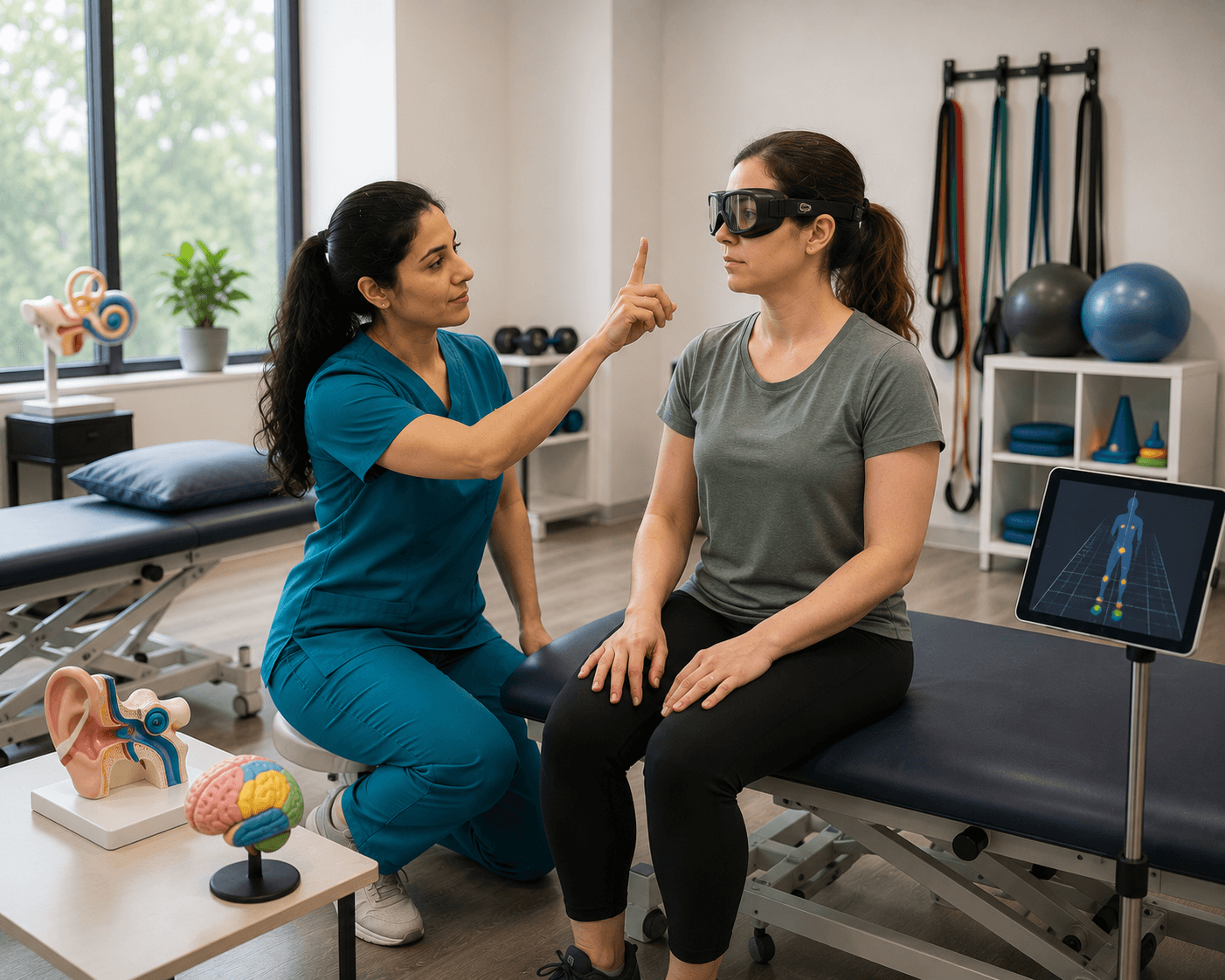
Most causes of vertigo and dizziness respond very well to specific physical therapy techniques, but the techniques differ entirely depending on the diagnosis. A patient with BPPV needs a positioning maneuver that resolves the problem in one to three visits. A patient with persistent postural-perceptual dizziness needs a multi-week vestibular rehabilitation program. Accurate diagnosis at the first visit is the most important step we take.
What we treat
We treat benign paroxysmal positional vertigo (BPPV) affecting the posterior, anterior, and lateral canals, along with recovery from acute vestibular neuritis and labyrinthitis. Our practice manages persistent postural-perceptual dizziness (PPPD)—the most common cause of chronic dizziness in adults—as well as Mal de débarquement syndrome and cervicogenic dizziness. Additionally, care covers unilateral and bilateral vestibular hypofunction, post-concussion vestibular symptoms, age-related balance decline, and vestibular migraine in coordination with neurology.
Our assessment
Benign paroxysmal positional vertigo (BPPV)—posterior, anterior, and lateral canal. Acute vestibular neuritis and labyrinthitis recovery. Persistent postural-perceptual dizziness (PPPD) — the most common cause of chronic dizziness in adults. Unilateral vestibular hypofunction. Vestibular migraine (in coordination with neurology). Mal de débarquement syndrome. Cervicogenic dizziness. Post-concussion vestibular symptoms. Bilateral vestibular hypofunction. Age-related balance decline.Vestibular assessment is the most important part of vertigo care—wrong diagnosis means wrong treatment. Our assessment includes detailed history, oculomotor examination, positional testing (Dix-Hallpike, supine roll), Head Impulse Test, balance and gait testing, and where indicated computerized dynamic posturography in partnership with referring providers.
Treatment
Canalith repositioning maneuvers for BPPV — Epley, Semont, Gufoni, Yacovino—depending on the affected canal. Vestibular rehabilitation exercises for unilateral hypofunction—gaze stabilization, habituation, balance retraining, dynamic visual acuity training. Graded exposure for PPPD. Cervical manual therapy for cervicogenic dizziness. Coordination with neurology for vestibular migraine treatment.
Outcome measures we use
- Dizziness Handicap Inventory (DHI)
- Vestibular Activities and Participation Measure
- Activities-specific Balance Confidence Scale
- Berg Balance Scale
- Dynamic Gait Index
- Functional Gait Assessment
Who leads this work at Kent
Vestibular rehabilitation at Kent is led by Labeeb Majid,a DHA-licensed physiotherapist with specific vestibular rehabilitation training.
Frequently asked questions
I have positional vertigo—how many sessions will I need?
Most BPPV resolves in one to three visits with the right positioning maneuver. If you've had BPPV that hasn't responded to a previous Epley, it may be the wrong canal—accurate re-diagnosis fixes it.
I've been dizzy for months and no one can find what's wrong — can you help?
Yes. Many patients with chronic dizziness have persistent postural-perceptual dizziness, vestibular migraine, or cervicogenic dizziness—all of which respond to specific rehabilitation, but require accurate diagnosis first.
Do you do the Epley maneuver?
Yes, we perform the full set of canalith repositioning maneuvers for all affected canals. We also identify which BPPV variant is present, which determines which maneuver will actually work.
I get dizzy after a head injury—can you help?
Yes. Post-concussion vestibular symptoms are common and respond well to vestibular rehabilitation. See our TBI page for the wider concussion approach.
What about Meniere's disease?
Meniere's disease is managed medically by an ENT or neurology specialist. We work alongside the medical team to help manage balance and the residual vestibular dysfunction between episodes.