
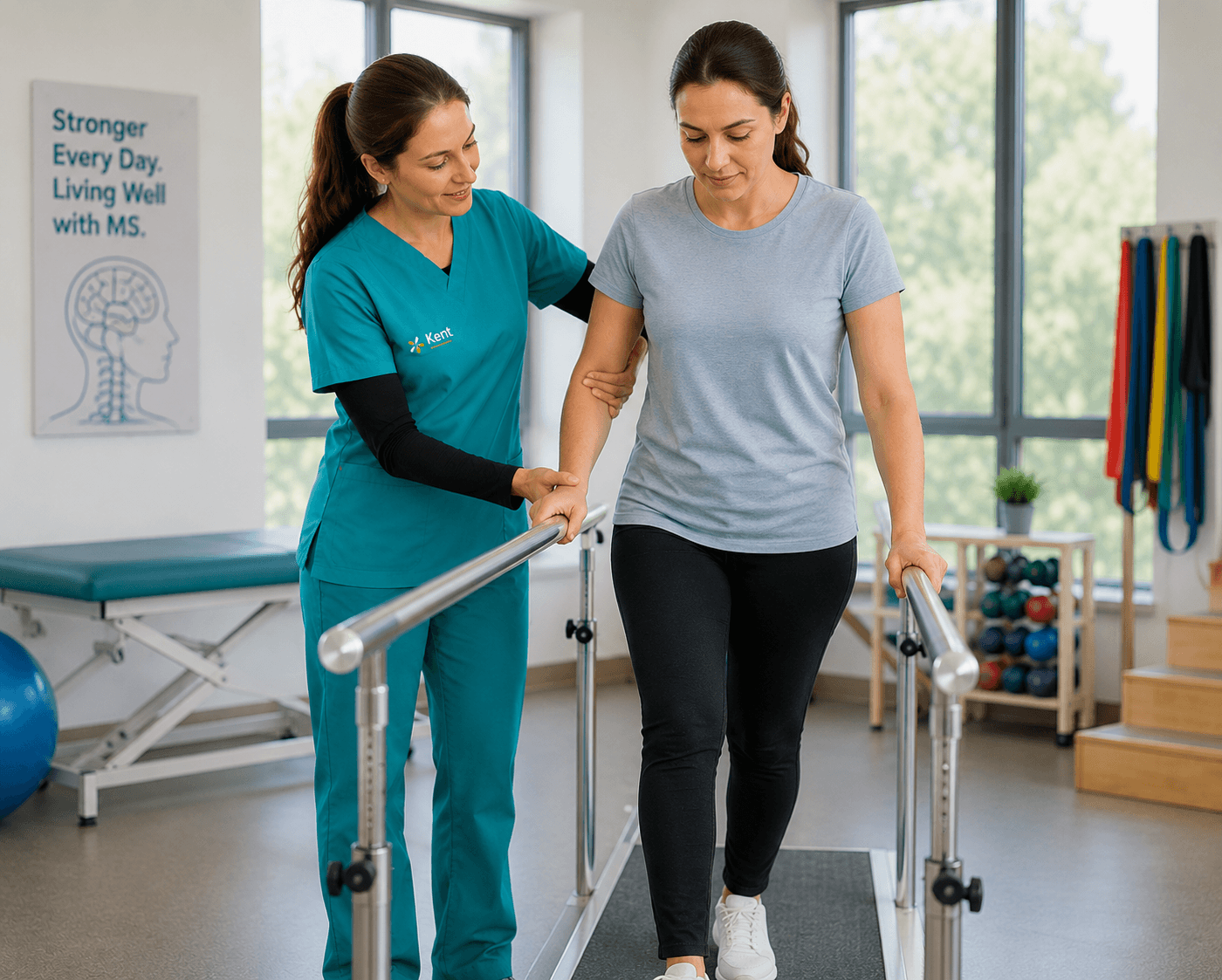
MS rehabilitation focuses on three priorities: maintaining and improving function during stable periods, recovering function after relapses, and managing fatigue. MS presents differently in every patient, so treatment is highly individualized. We work in shorter intensive blocks (typically 6–8 weeks) followed by maintenance reviews—a pattern that fits MS energy management better than continuous therapy.
What we work on
We address balance, fall prevention, and walking parameters such as speed, endurance, and gait quality, alongside upper- and lower-limb spasticity and fine motor tasks. Care plans include fatigue management, energy conservation, and cognitive retraining for attention, processing speed, and memory. Additionally, we provide support for bladder and pelvic floor health, speech and swallowing difficulties, adaptive equipment integration, and tailored exercise prescriptions for long-term disease management.
Fatigue management
Fatigue is one of the most disabling MS symptoms and one of the most modifiable. Our approach combines energy conservation training, pacing strategies, structured exercise (which counter-intuitively reduces fatigue when dosed correctly), sleep optimization, and cognitive-behavioral strategies. Fatigue management runs through every MS program rather than being a separate intervention.
Working with your neurologist
MS treatment requires ongoing coordination between neurology (disease-modifying therapy, relapse management) and rehabilitation (functional capability). We send written progress reports to your neurologist at every reassessment, adjust the rehabilitation plan around relapses and medication changes, and refer back promptly if we notice symptoms that need medical review.
Outcome measures we use
- Expanded Disability Status Scale (EDSS, coordinated with neurology)
- Multiple Sclerosis Impact Scale (MSIS-29)
- Fatigue Severity Scale
- Modified Fatigue Impact Scale
- Timed 25-Foot Walk
- 9-Hole Peg Test
- Berg Balance Scale
- Symbol Digit Modalities Test
- 6-Minute Walk Test
Who leads this work at Kent
MS rehabilitation at Kent is led by Jerom C Reji,a DHA-licensed neurological physiotherapist with specific training in progressive neurological disease.
Frequently asked questions
When is the right time to start rehabilitation for MS?
At diagnosis, rather than after significant disability develops. Early involvement in rehabilitation establishes a clear functional baseline, builds exercise tolerance during stable periods, and creates a trusted relationship with a team ready to respond quickly when needs change. Do not wait for symptoms to worsen.
Can rehabilitation slow MS progression?
Disease progression is determined by the underlying MS process and modified by disease-modifying therapy under your neurologist. Rehabilitation does not change the disease, but it consistently improves and preserves functional capability at every stage.
What about exercise—won't it make MS worse?
No. The evidence is unambiguous: appropriate exercise improves MS outcomes—fatigue, mobility, mood, cognition, quality of life. The key is appropriate dosing (avoiding overheating and severe fatigue) and adapting to the individual's current capacity.
Can you help during or after an MS relapse?
Yes. Acute relapses are managed medically by your neurologist. Post-relapse rehabilitation begins as soon as the patient is stable and helps recover function and prevent secondary deconditioning.
Do you treat MS-related fatigue?
Yes—as a core part of the program, not a separate issue. Fatigue management runs through every MS program.
What about bladder and pelvic floor problems?
Many MS patients have bladder symptoms or pelvic floor dysfunction. Our Movement practice's pelvic health specialists work alongside the neurological team where relevant.