
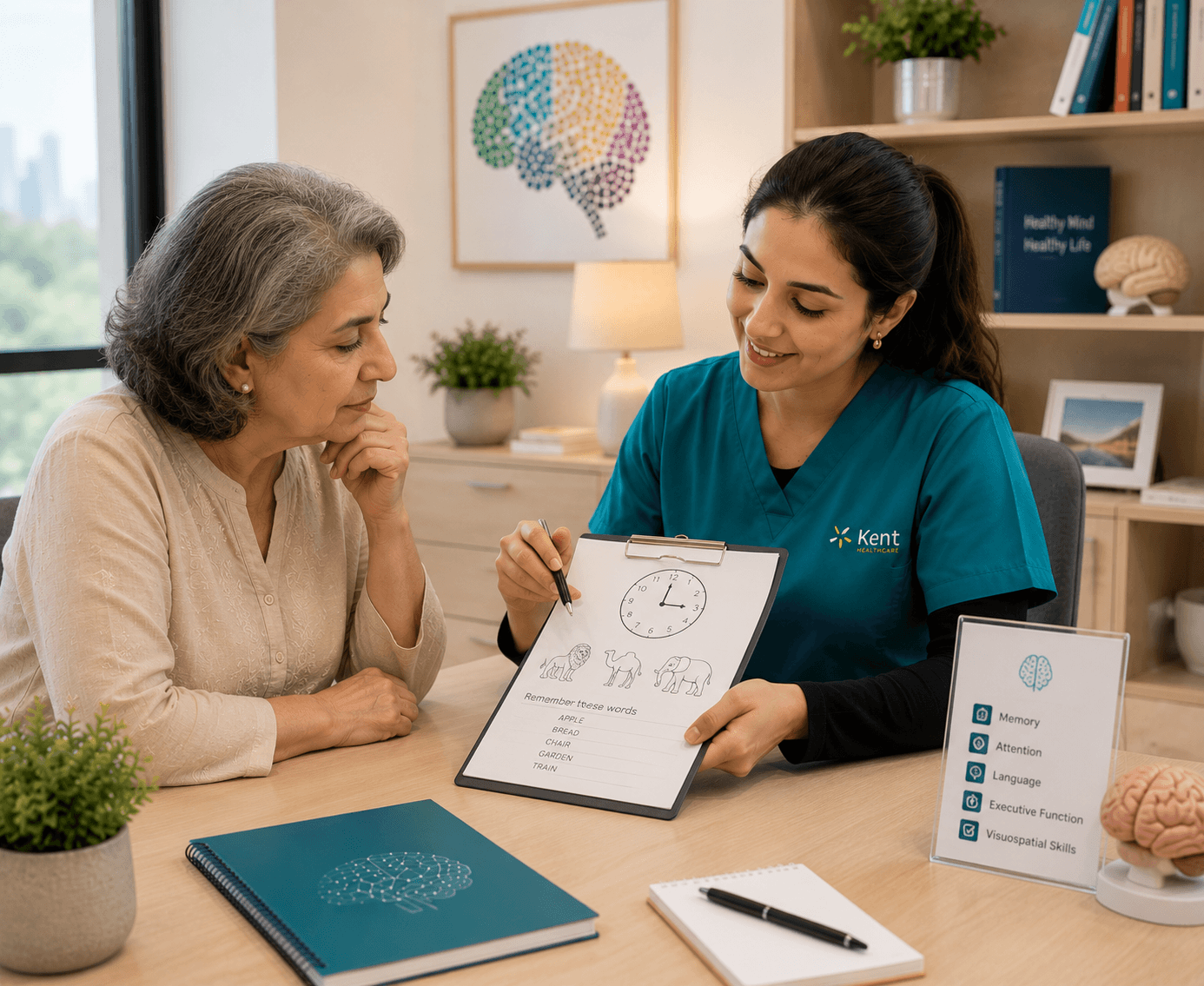
A memory clinic assessment finds out whether memory changes reflect normal ageing, a treatable cause, mild cognitive impairment, or early dementia, using structured cognitive testing rather than reassurance or a single screening test.
Memory concerns in older adults sit on a spectrum. Some reflect normal age-related cognitive change. Some reflect treatable causes. Some reflect mild cognitive impairment that may or may not progress. Some reflect early dementia. Distinguishing these requires structured assessment.
Signs of memory problems that need assessment
- Significant memory loss that affects daily life
- Repeating the same questions within a short period
- Getting lost in familiar places
- Trouble with everyday tasks such as managing bills or medication
Some cognitive change with age is normal, such as slower processing or occasional word-finding difficulty. Sudden confusion or a rapid change in thinking needs urgent medical attention.
Treatable causes of memory loss
Memory problems are not always dementia. Depression, sleep disorders, medications, and vitamin deficiencies can all affect memory and are often treatable, which is why assessment comes before conclusions.
What the memory clinic provides
- Cognitive screening to determine whether further assessment is warranted.
- Full neuropsychological assessment when indicated: a multi-hour battery covering attention, memory, language, executive function, and visuospatial ability.
- A written report with diagnostic impressions and recommendations.
- Coordination with your neurologist, geriatrician, or primary care physician.
- Annual or six-monthly follow-up cognitive monitoring for patients on a cognitive change pathway.
- Family education and support.
Who should consider a memory assessment
- Older adults (typically 60+) noticing memory or cognitive changes that concern them or their family.
- Patients whose primary care physician has raised concerns about cognition.
- Patients with new or worsening cognitive symptoms after a stroke, brain injury, or significant illness.
- Patients with a family history of early-onset dementia who want a baseline.
- Patients on neurology pathways where serial cognitive testing is part of disease monitoring.
Working with the medical team
We do not make formal dementia diagnoses; that is the role of your neurologist or geriatrician. We provide the cognitive assessment data that informs the diagnostic process, and we monitor cognition over time for patients already on a dementia care pathway. We coordinate closely with the rest of your medical team and refer onward when our assessment identifies issues that need medical workup.
Outcome measures we use
- Montreal Cognitive Assessment (MoCA)
- Addenbrooke's Cognitive Examination (ACE-III)
- Repeatable Battery for the Assessment of Neuropsychological Status (RBANS)
- Wechsler Memory Scale Subtests
- Trail Making Test
- Functional Activities Questionnaire
- Informant-Report Measures
About the clinician: my journey in memory assessment
The Memory Clinic at Kent is led by Nihal Muneer, DHA-licensed clinical neuropsychologist with specific training in older-adult cognitive assessment, in the Mind & Neuropsychology practice at Kent Healthcare, Bur Dubai.
[ADD in first person: qualifications and training, years assessing older adults, the conditions you see most, and why you work in cognitive health.]
Meet the Kent team · Related: adult ADHD assessment, cognitive rehabilitation
Frequently asked questions
What are the early signs of dementia?
Significant memory loss, repeating questions within a short period, getting lost in familiar places, and trouble with daily tasks are not normal age-related change and warrant assessment. Sudden confusion needs urgent medical attention.
What is mild cognitive impairment (MCI)?
Mild cognitive impairment means memory or thinking changes that are greater than expected for age but do not yet significantly interfere with daily life. For some people it stays stable or improves, and for others it progresses. Baseline assessment and follow-up monitoring help track which way it is going.
What is the MoCA test?
The Montreal Cognitive Assessment (MoCA) is a short screening test of memory, attention, language, and thinking skills. It helps decide whether further assessment is needed, and it is not a diagnosis on its own.
Is memory loss always dementia?
No. Memory problems can reflect normal ageing or treatable causes such as depression, sleep disorders, medications, and vitamin deficiencies, as well as mild cognitive impairment or early dementia. Structured assessment helps tell them apart.
Is forgetfulness in my 70s normal?
Some cognitive change with age is normal: slower processing, occasional word-finding difficulty, needing to write things down more. Significant memory loss, getting lost in familiar places, repeating questions within a short period, or trouble with daily tasks is not normal age-related change and warrants assessment.
Do you diagnose dementia?
We provide the cognitive assessment data that informs a dementia diagnosis. The formal diagnosis is made by a neurologist or geriatrician, integrating our assessment with their clinical examination, imaging, and blood work. We work alongside the medical team.
Will the assessment tell me if I'm going to get dementia?
It will give a clear picture of current cognitive function and identify whether you meet criteria for mild cognitive impairment or other cognitive disorders. It cannot predict the future definitively, but baseline assessment combined with follow-up monitoring is the most accurate way to track cognitive trajectory.
My family is concerned but I'm not. Should I come?
If family is noticing changes that you're not, that itself is sometimes diagnostically meaningful. An assessment can either reassure (if cognition is intact) or identify something that benefits from earlier intervention. Either outcome is useful.
Is the memory clinic covered by insurance?
Coverage for cognitive assessment varies by insurer and policy. Contact us with your insurance details and we will verify before booking.