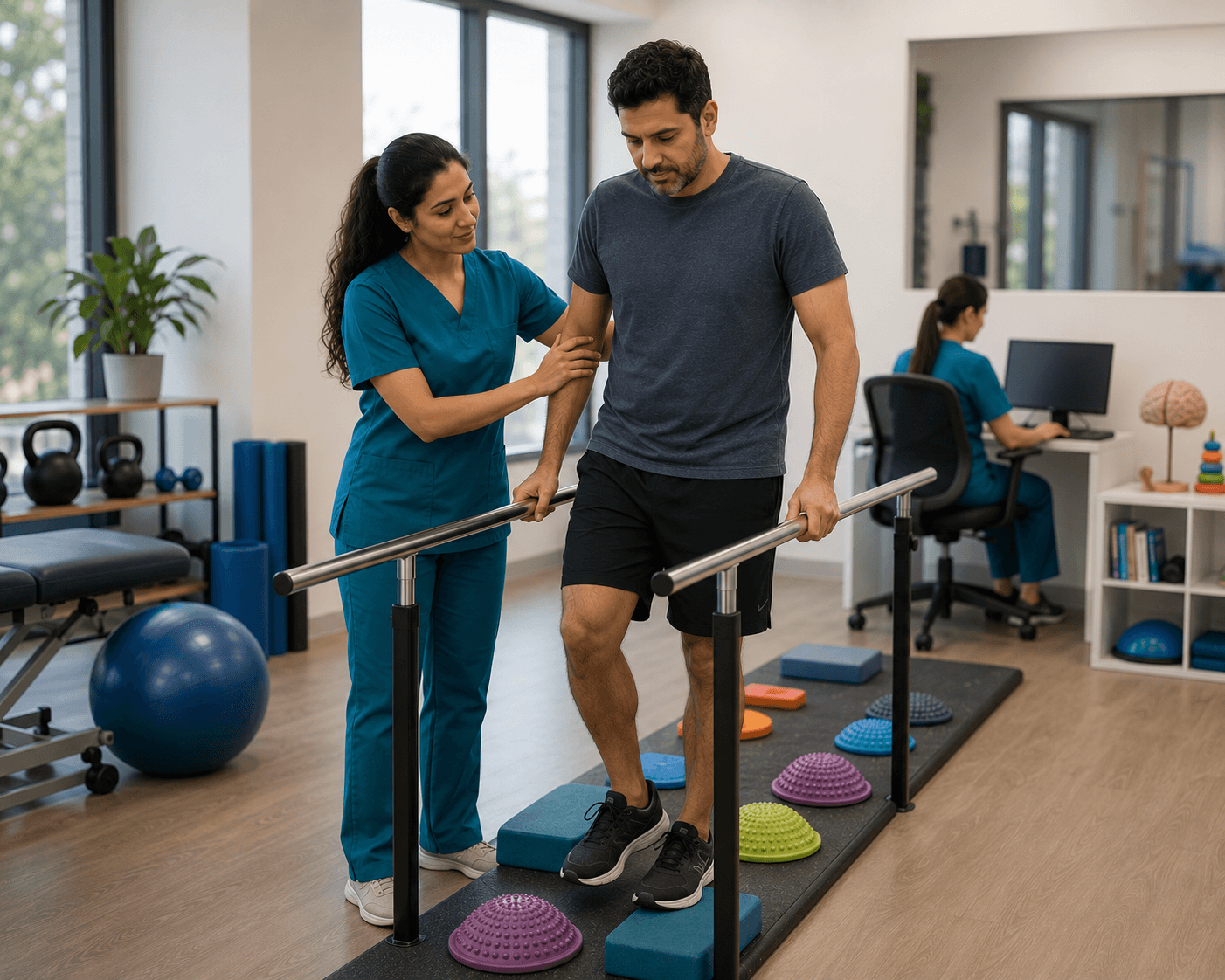
TBI rehabilitation is one of the most complex areas of neurological rehabilitation because the injury affects multiple systems simultaneously, motor, cognitive, behavioral, sensory, emotional. We treat the whole picture, not just the visible parts. Even mild TBI with persistent symptoms (post-concussion syndrome) typically needs structured rehabilitation when symptoms don't resolve in the expected two to four weeks.
Mild TBI and persistent post-concussion symptoms
Most mild TBI resolves without specialist intervention within two to four weeks. When symptoms such as headache, dizziness, vision problems, cognitive fog, sleep disturbance, mood changes, or exercise intolerance persist, structured rehabilitation can produce significant recovery. Our post-concussion program combines vestibular rehabilitation, graded return-to-activity programming, vision therapy where indicated, cognitive rehabilitation, and education on symptom management.
Moderate to severe TBI
After moderate or severe brain injury, rehabilitation is comprehensive and long-term. Physical recovery focuses on gait, balance, strength, and motor control. Cognitive rehabilitation—attention, memory, executive function, processing speed. Behavioural and emotional regulation. Speech and communication, including cognitive-communication disorder. Activities of daily living and return-to-community work. Family education and support.
Our approach
Multidisciplinary by default. Three to five disciplines often work with the same patient under a single coordinated plan. The team meets weekly for case discussion. Sessions are scheduled in patterns that accommodate fatigue and cognitive load—shorter, more frequent sessions early in recovery, with consolidation into longer sessions as endurance returns.
Outcome measures we use
- Rancho Los Amigos Scale of Cognitive Functioning
- Glasgow Outcome Scale-Extended
- Functional Independence Measure (FIM)
- Disability Rating Scale
- Cognistat / RBANS
- Berg Balance Scale
- 10-Metre Walk Test
- Concussion-specific: VOMS, Buffalo Concussion Treadmill Test
Who leads this work at Kent
TBI rehabilitation at Kent is led by Sruthi Mambally, working with a multidisciplinary team across neurological PT, OT with cognitive rehabilitation focus, speech-language pathology, and neuropsychology.
Frequently asked questions
I had a concussion two months ago and I'm still not right—can you help?
Yes. Persistent post-concussive symptoms beyond two to four weeks are common and respond well to structured rehabilitation. The combination of vestibular therapy, graded exertion, vision therapy where needed, and cognitive rehabilitation produces significant improvement in most patients.
What's the difference between concussion clinics and TBI rehabilitation?
Concussion clinics typically focus on acute concussion management. Rehabilitation is what comes next: structured therapy for persistent symptoms or for moderate-to-severe TBI recovery. We are the rehabilitation side.
Can rehabilitation help years after a brain injury?
Yes. Meaningful improvement is possible long after the acute phase, particularly when patients have not had access to structured multidisciplinary rehabilitation previously.
Do you work with sports concussion patients?
Yes. We work with amateur and professional athletes on post-concussion recovery and return-to-play, coordinating with sports physicians on the medical clearance side.
My family member had a serious head injury and is now home from hospital—can you help?
Yes. Post-discharge rehabilitation after moderate or severe TBI is the heart of what our practice does. We assess at home or in clinic and build a multidisciplinary program from there.