
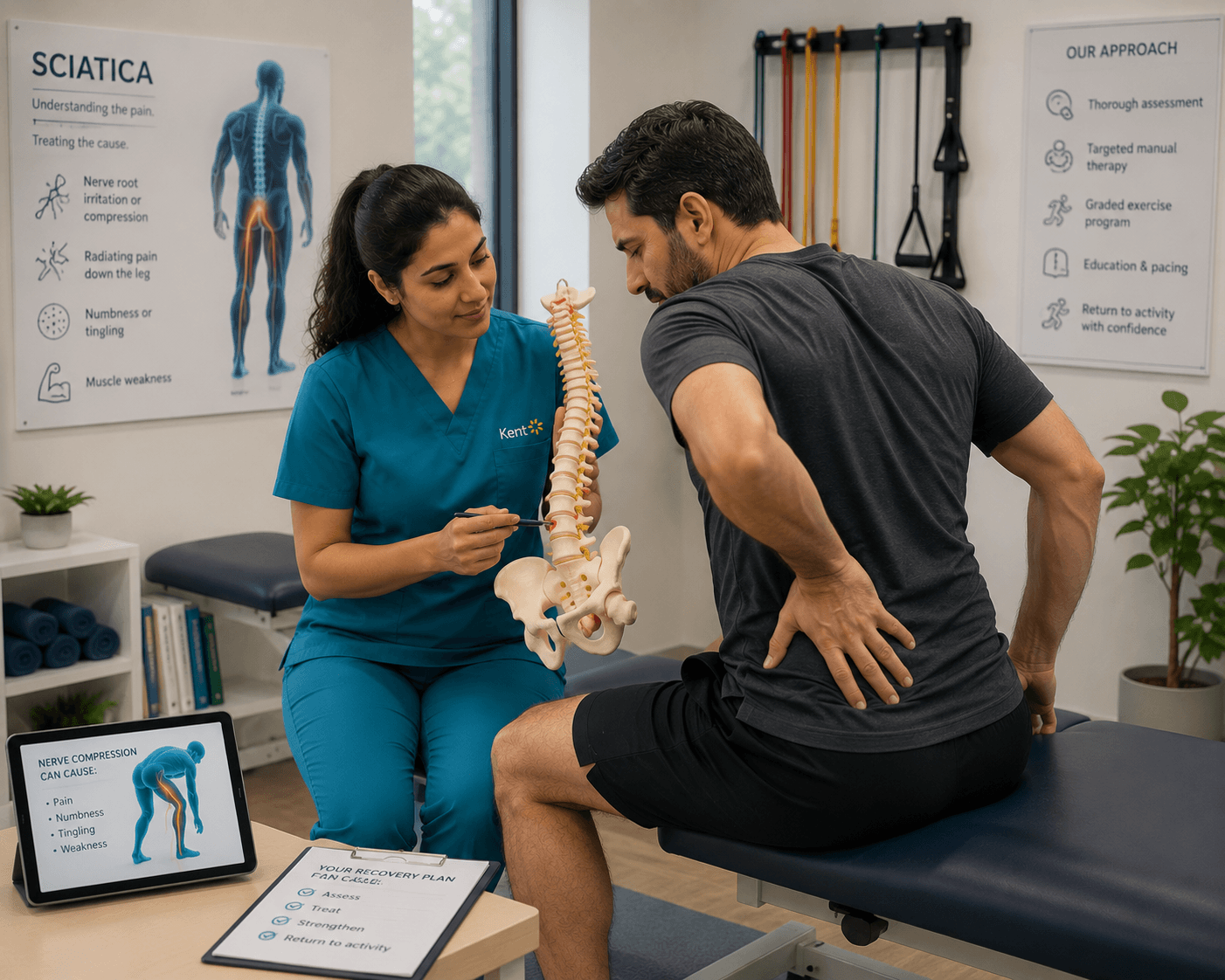
Chronic low back pain (pain lasting more than 12 weeks) is the world's most common cause of disability—and one of the most over-treated conditions in healthcare. Most patients don't need surgery. Most don't need imaging. What most need is structured rehabilitation: progressive exercise, education about pain, and addressing the factors (deconditioning, fear of movement, sleep, mood, work stress) that maintain chronic pain.
Our approach
We begin with a comprehensive assessment that includes red-flag screening, functional testing, and a discussion about your specific back concerns. Your treatment centers on a graded exercise program built around what you can comfortably do now, then systematically progressed. We incorporate pain education—explaining chronic pain, imaging misalignments, and why movement is safe, alongside targeted manual therapy to accelerate active progress. Additionally, care includes pacing strategies, sleep optimization, return-to-activity planning, and integrated care with our Mind & Neuropsychology Practice when psychological factors are present.
What we don't do
We don't prescribe extended courses of passive treatment without active rehabilitation alongside. We don't recommend imaging without clinical indication. We don't reinforce unhelpful beliefs about backs being fragile. We refer to a spinal surgeon when there are red flags or when a structural problem genuinely warrants surgical opinion—but most patients don't need that.
Outcome measures we use
- Oswestry Disability Index
- Roland-Morris Disability Questionnaire
- Visual Analogue Scale
- Tampa Scale of Kinesiophobia
- Start Back Screening Tool
- Patient-Specific Functional Scale
Who leads this work at Kent
Chronic low back pain rehabilitation at Kent is delivered by Shreedip Patil senior physiotherapists with specific training in chronic pain rehabilitation.
Frequently asked questions
My MRI shows disc problems, does that mean I need surgery?
Usually no. Imaging findings (disc bulges, degeneration, even disc herniations) are common in pain-free people and don't always correlate with symptoms. Decisions about surgery are based on clinical examination and symptoms, not imaging alone.
What's the difference between Kent's approach and a general physiotherapy clinic?
We deliver structured rehabilitation programs that are exercise-led, education-rich, and outcome-tracked. Many clinics offer brief manual therapy or passive modalities and not much else. The evidence strongly favors active rehabilitation for chronic back pain.
I've had back pain for years—can rehabilitation still help?
Yes. Long-standing chronic back pain responds to structured rehabilitation, though it usually takes longer to change than recent pain.
Should I avoid exercise because of my back pain?
Almost certainly no. Avoidance of movement is one of the main factors that maintains chronic back pain. Appropriate exercise—dosed correctly — is the most consistently effective treatment we have.
Do you do spinal manipulation?
Where clinically appropriate, yes. But manipulation alone doesn't change long-term outcomes for chronic low back pain—it's a tool used within an active rehabilitation program, not a standalone treatment.