
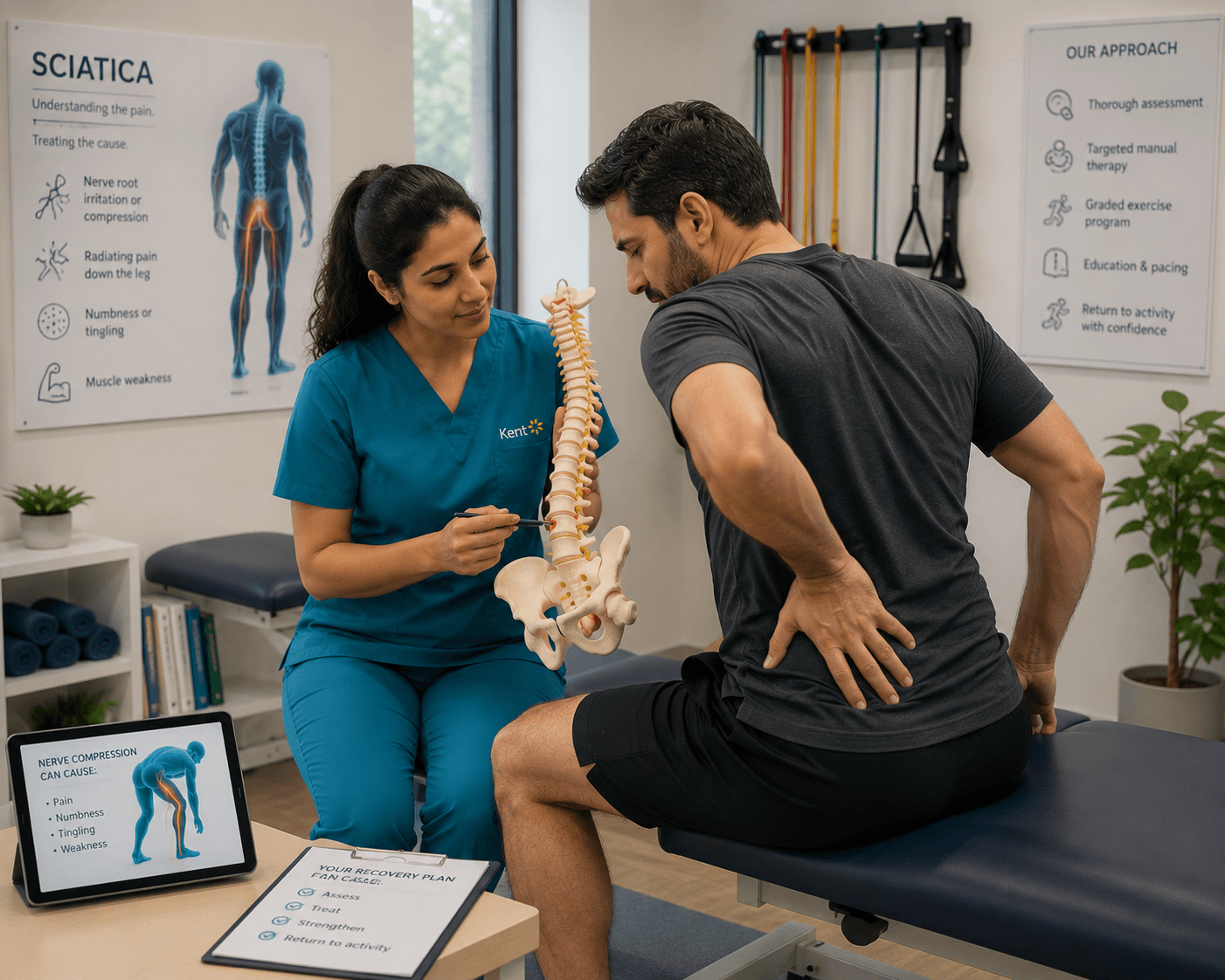
Chronic low back pain is back pain lasting more than 12 weeks, and the most effective treatment for most people is a structured, exercise-led rehabilitation program with pain education, not rest, passive treatments, or surgery.
Chronic low back pain is the world's most common cause of disability, and one of the most over-treated conditions in healthcare. Most patients don't need surgery. Most don't need imaging. What most need is structured rehabilitation: progressive exercise, education about pain, and addressing the factors (deconditioning, fear of movement, sleep, mood, work stress) that maintain chronic pain.
When back pain needs urgent medical care
Most back pain is not dangerous, but see a doctor urgently if it comes with:
- Weakness in a leg, or numbness around the groin or buttocks
- New difficulty controlling your bladder or bowels
- Fever, unexplained weight loss, or a history of cancer
- Pain after a significant fall or injury
We screen for these red flags at every assessment before starting rehabilitation.
Our approach to chronic back pain rehabilitation
- Comprehensive assessment: red-flag screening, functional testing, and a discussion of your specific back concerns.
- Graded exercise program: built around what you can comfortably do now, then systematically progressed.
- Pain education: explaining chronic pain, what imaging findings do and do not mean, and why movement is safe.
- Targeted manual therapy to support, not replace, active progress.
- Pacing, sleep, and return-to-activity planning, including work and sport.
- Integrated care with our Mind & Neuropsychology practice when psychological factors are present.
What we don't do
We don't prescribe extended courses of passive treatment without active rehabilitation alongside. We don't recommend imaging without clinical indication. We don't reinforce unhelpful beliefs about backs being fragile. We refer to a spinal surgeon when there are red flags or when a structural problem genuinely warrants a surgical opinion, but most patients don't need that.
Outcome measures we use
- Oswestry Disability Index
- Roland-Morris Disability Questionnaire
- Visual Analogue Scale
- Tampa Scale of Kinesiophobia
- STarT Back Screening Tool
- Patient-Specific Functional Scale
About the clinician: my journey in back pain rehabilitation
Chronic low back pain rehabilitation at Kent is delivered by Shreedip Patil, senior physiotherapist with specific training in chronic pain rehabilitation, in the Movement practice at Kent Healthcare, Bur Dubai.
[ADD in first person: qualifications and pain-rehabilitation training, years treating chronic back pain, the patients you see most, and why you favor an active approach.]
Meet the Kent team · Related: sciatica and lumbar radiculopathy, shoulder rehabilitation
Frequently asked questions
What exercises help chronic low back pain?
The best exercise is the one matched to you. We start with what you can do comfortably now, such as graded walking, mobility, and strengthening, then progress it step by step. Appropriate exercise, dosed correctly, is the most consistently effective treatment we have.
How long does it take to recover from chronic low back pain?
Progress is usually gradual, over weeks to months, and long-standing pain takes longer to change than recent pain. We track your function with validated measures so you can see progress, not just pain scores.
When should I see a doctor urgently for back pain?
Seek urgent medical care if back pain comes with leg weakness, numbness around the groin or buttocks, new difficulty controlling your bladder or bowels, fever, unexplained weight loss, or follows a significant injury. We screen for these red flags at every assessment.
Is chronic low back pain the same as sciatica?
No. Chronic low back pain is felt mainly in the lower back. Sciatica involves pain, numbness, or tingling travelling down the leg from an irritated nerve. They can occur together, and we assess for both.
My MRI shows disc problems, does that mean I need surgery?
Usually no. Imaging findings (disc bulges, degeneration, even disc herniations) are common in pain-free people and don't always correlate with symptoms. Decisions about surgery are based on clinical examination and symptoms, not imaging alone.
What's the difference between Kent's approach and a general physiotherapy clinic?
We deliver structured rehabilitation programs that are exercise-led, education-rich, and outcome-tracked. Many clinics offer brief manual therapy or passive modalities and not much else. The evidence strongly favors active rehabilitation for chronic back pain.
I've had back pain for years. Can rehabilitation still help?
Yes. Long-standing chronic back pain responds to structured rehabilitation, though it usually takes longer to change than recent pain.
Should I avoid exercise because of my back pain?
Almost certainly no. Avoidance of movement is one of the main factors that maintains chronic back pain. Appropriate exercise, dosed correctly, is the most consistently effective treatment we have.
Do you do spinal manipulation?
Where clinically appropriate, yes. But manipulation alone doesn't change long-term outcomes for chronic low back pain. It's a tool used within an active rehabilitation program, not a standalone treatment.