
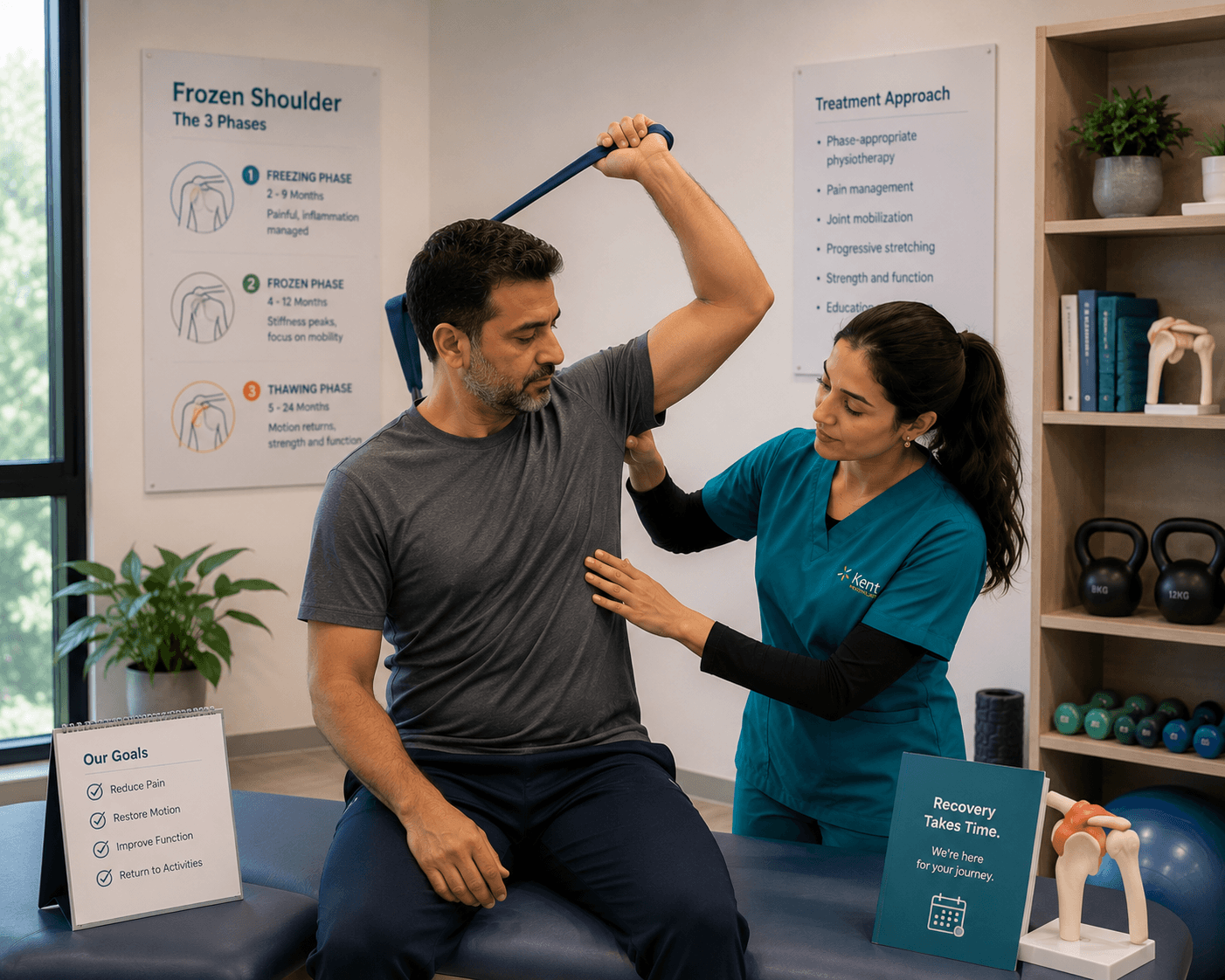
Frozen shoulder typically resolves over 18–24 months even without treatment, but with significant pain and disability during that time. Structured rehabilitation can substantially reduce the duration and severity. The key is matching treatment to the phase the patient is in—getting this wrong (aggressive stretching during the painful early phase, for example) makes things worse.
The three phases of frozen shoulder
- Freezing Phase (2–9 months): Pain dominates while shoulder stiffness begins to develop. Treatment focuses on pain control, gentle motion within tolerance, and patient education—aggressive stretching in this phase can increase pain and inflammation.
- Frozen Phase (4–12 months): Pain gradually reduces, but stiffness peaks. Treatment focuses on regaining range of motion through structured manual therapy and progressive stretching.
- Thawing Phase (5–24 months): Range of motion gradually returns. Treatment focuses on consolidating mobility and rebuilding overall shoulder function.
Treatment options
Phase-appropriate physiotherapy is the foundation. Corticosteroid injection—referred to a sports medicine physician or orthopedic surgeon—can be very useful in the early painful phase and we coordinate this where appropriate. Hydrodilatation injection is another option for stubborn cases. Manipulation under anesthetic or arthroscopic capsular release are surgical options for cases that fail conservative treatment.
Diabetes and frozen shoulder
Patients with diabetes have higher rates of frozen shoulder, often more severe and longer-lasting. Diabetes control matters for shoulder outcomes. We coordinate with the patient's diabetes team where relevant.
Outcome measures we use
- Shoulder Pain and Disability Index (SPADI)
- DASH
- Constant-Murley Score
- Active and Passive Range of Motion
- Visual Analogue Scale
Who leads this work at Kent
Frozen shoulder treatment at Kent is delivered by Sruthi Mambally senior physiotherapists with specific upper-limb training.
Frequently asked questions
How do you know it's frozen shoulder and not something else?
Frozen shoulder has a distinctive pattern—progressive loss of both active and passive range of motion (especially external rotation), with characteristic phases. Clinical examination usually distinguishes it from rotator cuff problems and other shoulder conditions.
How long will my frozen shoulder take to resolve?
Variable. With phase-appropriate treatment, most patients see substantial improvement in 6–12 months. Without treatment, the natural history is 18–24 months.
Should I have a steroid injection?
Often yes, particularly in the painful early phase. Corticosteroid injection can substantially reduce pain and shorten the freezing phase. We refer for injection where clinically appropriate.
Should I stretch through pain?
It depends on the phase. In the early painful phase, aggressive stretching makes things worse. In the stiff middle phase, working into discomfort with appropriate technique is necessary to regain range. We coach you on the difference.
Will I get frozen shoulder in the other shoulder?
About 10–20% of patients develop frozen shoulder in the other shoulder, usually within a few years. There's no good way to prevent this, but early recognition and treatment are what matters when it happens.