
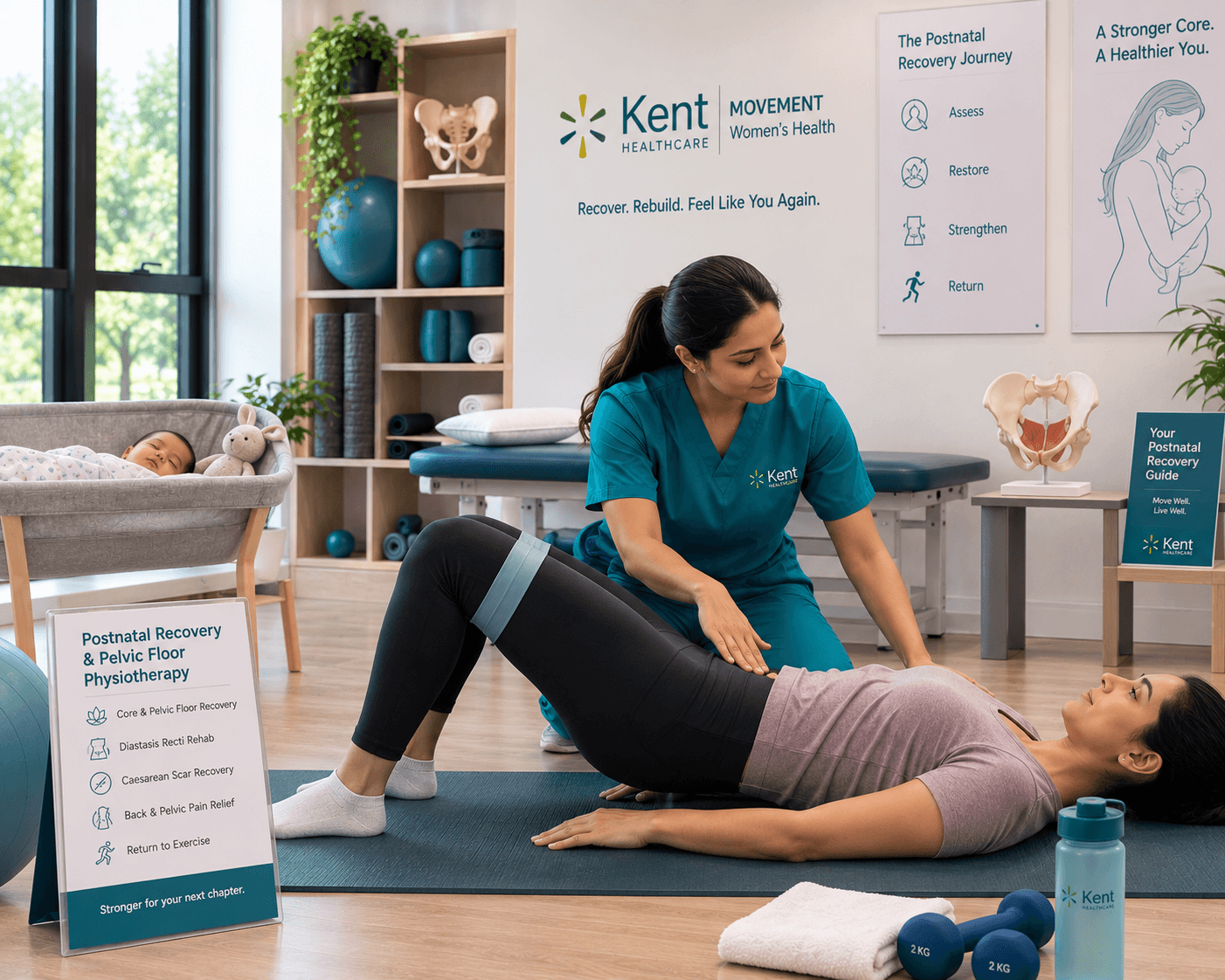
Postnatal physiotherapy is one of the most underutilized areas of healthcare in the UAE. Most women receive no structured physical rehabilitation after giving birth, despite the fact that pregnancy and delivery affect the abdominal wall, pelvic floor, and posture in ways that don't fully resolve without specific work. The recovery is improved substantially with structured rehabilitation.
What we treat
We treat diastasis recti (abdominal separation) and pelvic floor dysfunction, including stress, urge, and mixed incontinence, alongside pelvic organ prolapse. Our practice provides perineal pain treatment, perineal and Cesarean section scar recovery, and core reconnection therapy. We manage pregnancy-related pelvic girdle pain and low back pain linked to pregnancy and postnatal posture changes. Additionally, we deliver structured return-to-exercise and return-to-running programming tailored to post-partum recovery.
When to start
We treat diastasis recti (abdominal separation) and pelvic floor dysfunction, including stress, urge, and mixed incontinence, alongside pelvic organ prolapse. Our practice provides perineal pain treatment, perineal and Cesarean section scar recovery, and core reconnection therapy. We manage pregnancy-related pelvic girdle pain and low back pain linked to pregnancy and postnatal posture changes. Additionally, we deliver structured return-to-exercise and return-to-running programming tailored to post-partum recovery.
Our approach
Comprehensive assessment—including specific pelvic floor and abdominal evaluation. A graded exercise program building from foundational core and pelvic floor work through progressive functional loading. Manual therapy where indicated. Scar management for cesarean and perineal scars. Education on bladder, bowel, and sexual function recovery. Return-to-exercise programming with specific criteria for return to running and impact.
Outcome measures we use
- International Consultation on Incontinence Questionnaire (ICIQ)
- Pelvic Floor Distress Inventory
- Diastasis Recti Measurement (inter-recti distance)
- Visual Analogue Scale
- Patient-Specific Functional Scale
Who leads this work at Kent
Postnatal and pelvic floor physiotherapy at Kent is delivered by Aleena Mathew physiotherapist with specific women's health and pelvic floor training.
Frequently asked questions
When should I start postnatal physiotherapy?
Initial assessment is appropriate from around 6 weeks postpartum (after the standard 6-week medical check). Earlier consultation is available for specific concerns or complicated births.
I had my baby two years ago—is it too late?
No. There is no upper time limit. Many of our patients come months or years after delivery, often for persistent incontinence, abdominal separation, or pain that they assumed they had to live with. Most respond well to structured rehabilitation.
What about leaking when I sneeze or exercise?
Stress incontinence—leaking with cough, sneeze, lift, or exercise—is common after childbirth but is not normal and is highly treatable. Structured pelvic floor rehabilitation resolves it in the substantial majority of cases.
When can I start running again after giving birth?
Most current guidance recommends a structured progression and not before 12 weeks postpartum at minimum. We have specific return-to-running criteria we assess and we coach women through the progression rather than letting them guess.
Will I see a female therapist?
Yes. Our pelvic floor and postnatal physiotherapy is delivered by female physiotherapists.